✓ Verified
New
Hot
Deal
Free Hall Entry Promotion (Cosm Atlanta)
Enjoy free entry to The Hall with event ticket.
Valid in United States

Cosm is a global technology company delivering immersive experiences for Sports and Entertainment, Science and Education, and Parks and Attractions.
Enjoy free entry to The Hall with event ticket.
Valid in United States
15% off for service members on tickets!
Valid in United States
We track 2 live offers for Cosm in Shopping, the best of them worth 15% OFF. The list was last checked against the merchant's feed on September 14, 2026, and codes that stop working are dropped rather than left on the page to pad the count. Where a code is exclusive to new customers or capped at a maximum discount, the terms say so above — you should not have to reach the checkout to find that out.
Published September 7, 2026
If you own cryptocurrency and it sits on an exchange, you do not really own it. You own an entry in someone else's database, and a promise. That distinction has cost people everything more than once — Mt. Gox, QuadrigaCX, Celsius, FTX. Every one of those collapses ended the same way: users who held coins on the platform discovered that "your balance" and "your coins" were never the same thing.
A hardware wallet is the answer to that problem. It is a small physical device that holds the private keys to your crypto and never lets them leave. When you want to send funds, the transaction is built on your computer or phone, passed to the device, signed inside it, and passed back. The key itself never touches an internet-connected machine. Malware on your laptop can watch you type, read your clipboard and screenshot your screen, and still walk away with nothing.
Ledger is the most widely used maker of these devices. The company is French, founded in 2014, and has shipped several million units. This guide covers its full 2026 line-up — five devices at five price points — explains what actually differs between them, and is honest about the two episodes in the company's history that a buyer deserves to know about before spending money.
It is worth being precise here, because hardware wallets are often sold with vague promises of "security" that do not tell you where the boundary lies.
A hardware wallet protects you from: malware on your computer that steals wallet files or keystrokes; a compromised browser extension that swaps a destination address; a phishing site that convinces you to paste a recovery phrase into a web form (assuming you refuse, which the device is designed to make easy); and physical theft of your laptop or phone.
A hardware wallet does not protect you from: approving a malicious transaction because you did not read the screen; losing your recovery phrase; writing that phrase into a photo, a password manager, or a cloud note; a scam that persuades you to send funds voluntarily; or someone with physical access to both the device and its PIN.
That last group matters more than the first, because in practice most people who lose crypto while owning a hardware wallet lose it to the second list. The device removes one very specific class of attack — remote key extraction — and leaves your judgement responsible for everything else. Any review that tells you a hardware wallet makes you safe, full stop, is selling something.
Every Ledger contains a Secure Element — the same category of tamper-resistant chip used in passports and bank cards. It is built to resist physical attacks: probing the silicon, glitching the power supply, reading the chip under a microscope. Your private keys are generated inside it and are designed never to come out.
Alongside the Secure Element runs Ledger's own operating system, BOLOS, which keeps each cryptocurrency app isolated from the others. An app for one chain cannot read the keys used by another. This is why a single device can hold Bitcoin, Ethereum, Solana and a long list of others without those apps being able to interfere with each other.
When you first set the device up, it generates a 24-word recovery phrase. This follows the BIP39 standard, which means it is not Ledger-specific: those 24 words are the actual master key to your funds, and they would restore your wallet on a competing device from another manufacturer. This is the single most important object you will handle. Everything else — the device, the PIN, the app — is replaceable. The phrase is not.
Day-to-day you interact through Ledger Live, the desktop and mobile app that shows balances, builds transactions, and handles buying, swapping and staking through integrated third-party providers. Ledger Live never sees your keys. It prepares a transaction and asks the device to sign it; you verify the details on the device's own screen and physically confirm.
That last step is the heart of the design and the reason screen size matters more than it first appears. The device screen is the only display in the chain that malware cannot alter. If your computer is compromised and shows you one destination address while sending another, the device screen is where the discrepancy becomes visible — but only if you actually read it, and only if the screen is large enough to show the whole address and the full context of what you are approving.
Five devices, from $59 to $399. The jump in price does not buy you more security — every model uses a Secure Element and the same underlying key handling. What it buys is screen, connectivity, and how pleasant the thing is to actually use.
| Model | Price | Screen | Connection | Best for |
|---|---|---|---|---|
| Nano S Plus | $59 | Small monochrome, buttons | USB-C | First device, long-term storage |
| Nano X | $99 | Small monochrome, buttons | USB-C + Bluetooth | Signing from a phone |
| Nano Gen5 | $179 | Larger, colour | USB-C + Bluetooth | The current mainstream Nano |
| Flex | $249 | 2.8″ E Ink touchscreen, Gorilla Glass | USB-C + Bluetooth | Frequent use, NFT and DeFi signing |
| Stax | $399 | Curved E Ink touchscreen | USB-C + Bluetooth | Those who want the flagship |
Prices are Ledger's own listed prices at the time of writing and exclude shipping and local taxes. Colour and special editions vary by a few dollars — the Flex Bonk Edition, for instance, lists at $259 rather than $249.
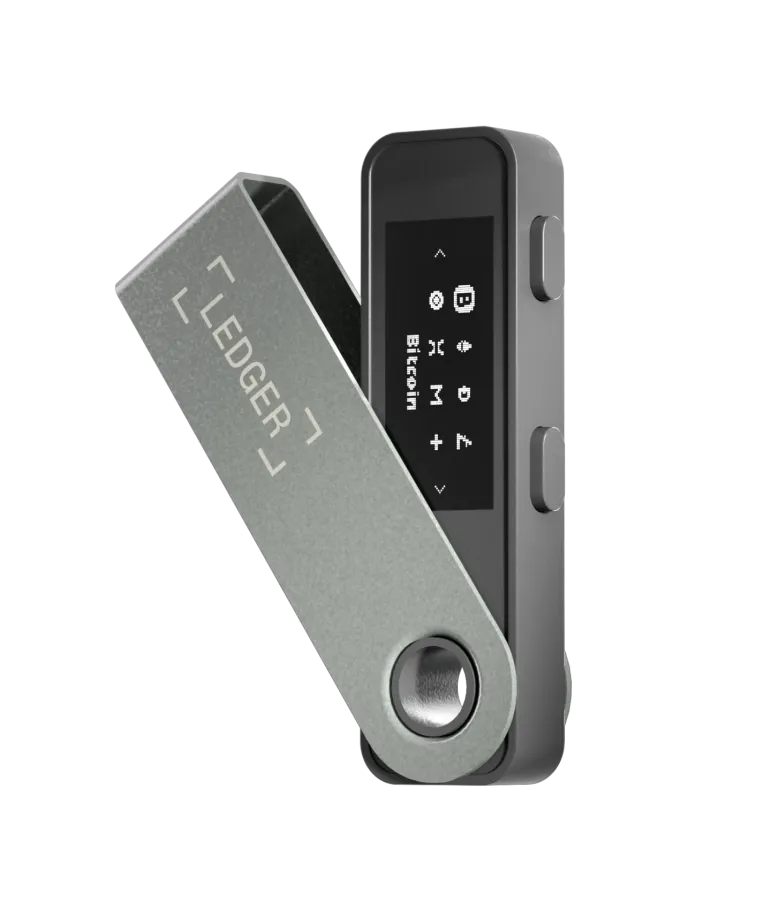
The Nano S Plus is the entry point and, for a large share of buyers, the correct answer. It has a small monochrome display and two physical buttons. You scroll with the buttons, confirm by pressing both. There is no Bluetooth: it connects by USB-C to a computer or, with the right cable, to a phone.
What matters is what it does not compromise on. The Secure Element is there. The 24-word phrase is generated the same way. The signing model is identical to the $399 device. A transaction signed on a Nano S Plus is exactly as valid and exactly as protected as one signed on a Stax.
The trade-off is the experience. Reading a long Ethereum contract interaction on a screen that shows a handful of characters at a time is genuinely tedious, and tedium is a security problem: people who find verification annoying start skipping it. If you are going to interact with DeFi protocols weekly, that friction will eventually cost you attention at the wrong moment.
Buy it if: you are buying Bitcoin or a few major assets and intend to hold them, moving funds rarely. For that use, spending more is spending on convenience you will not use.
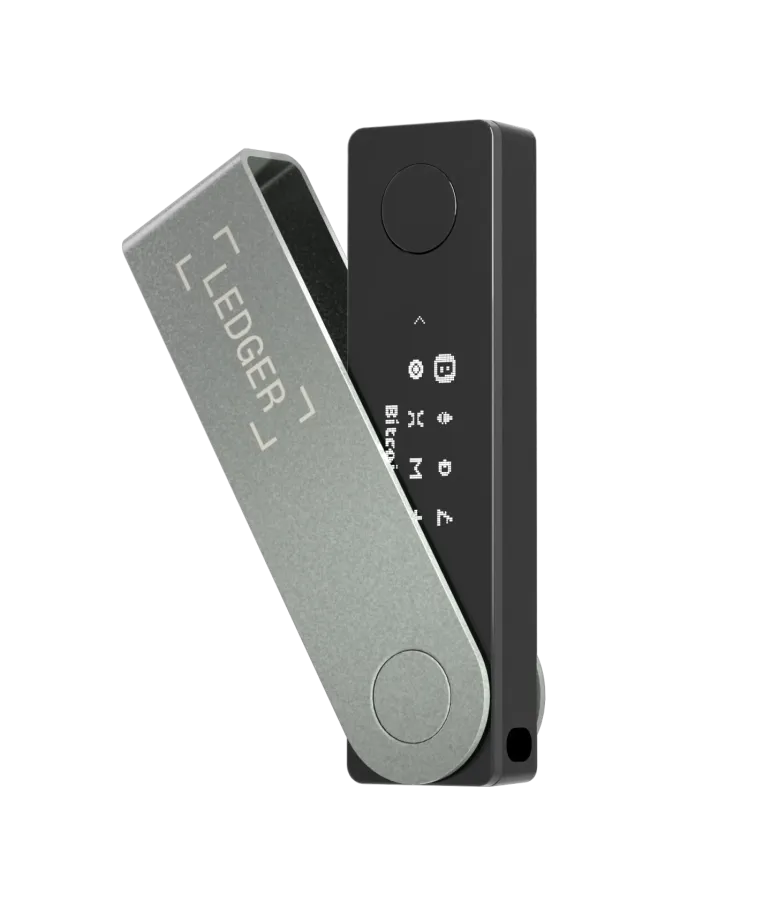
The Nano X is the Nano S Plus with Bluetooth and a larger battery. That sounds minor and is not: it changes where you can use the device. With Bluetooth you can sign from Ledger Live on a phone without carrying a cable and without an adapter, which is the difference between a device you use and a device that lives in a drawer.
Bluetooth raises an obvious question, and the answer is reassuring: the pairing carries only the transaction to be signed and the signature that comes back. Private keys are never transmitted over it, by design — the wireless link is treated as untrusted in the same way the USB link is. An attacker in Bluetooth range gains the ability to be annoying, not the ability to steal.
Buy it if: you manage crypto mostly from your phone, or you travel and want to check and move funds without carrying accessories.
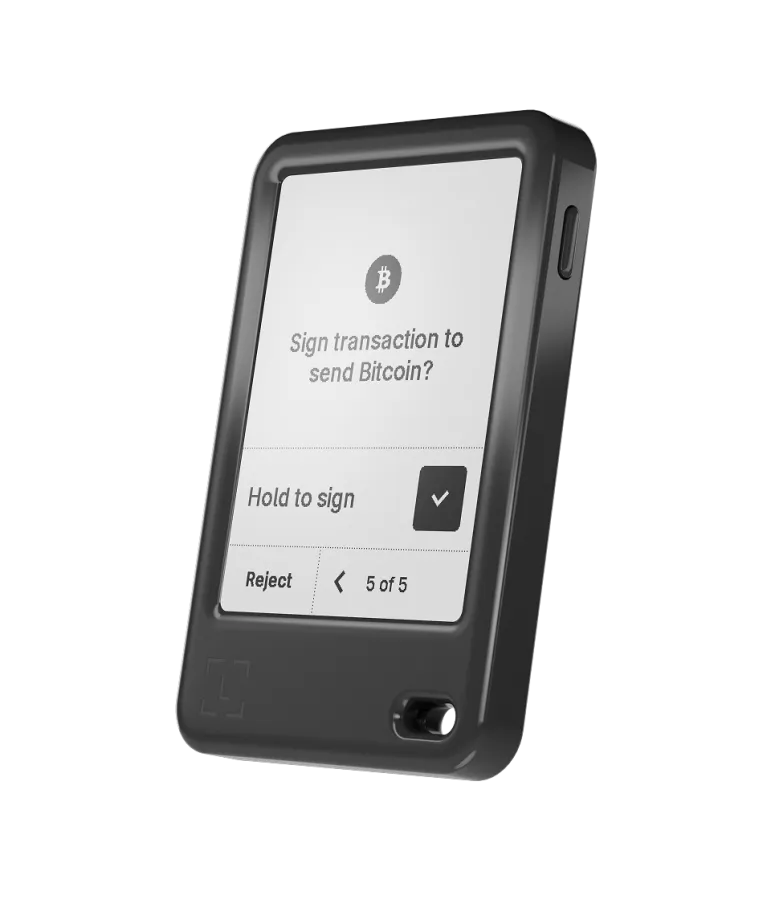
The Gen5 is the current generation of the Nano line and sits at $179, between the Nano X and the Flex. The headline change is the display: substantially larger and in colour, which addresses the single biggest complaint about the older Nanos. It keeps Bluetooth and USB-C, and it accepts the Magnet Folio and Badges accessories Ledger sells alongside it.
Where it lands for a buyer is straightforward. If the small Nano screen is what has put you off, but $249 for a Flex is more than you want to spend, this is the device that exists to fill that gap. If you were content with a Nano X, the Gen5 is a comfort upgrade rather than a security one.
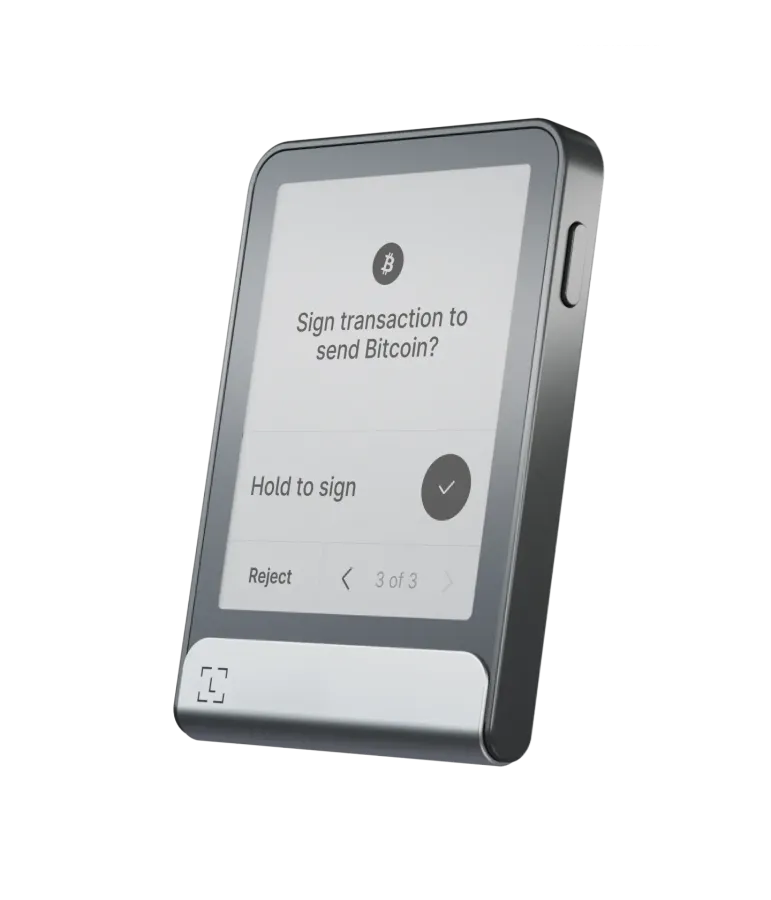
The Flex is where the line-up changes character. It has a 2.8-inch E Ink touchscreen behind Gorilla Glass, and you operate it by touch rather than by clicking through with buttons. Ledger includes a Recovery Key with it.
E Ink is an unusual choice for a device like this and a deliberate one. It holds an image without drawing power, so the screen can display an address indefinitely while you check it against another source. It stays readable in direct sunlight. And it draws so little power that battery life is measured in a way that makes the device practical to keep in a bag rather than on a charger.
The practical gain is verification. On a Nano, checking a long address means scrolling through it in fragments and holding the pieces in your head. On the Flex the whole thing is on screen at once, next to the amount and the contract you are interacting with. If you sign transactions regularly — and especially if you touch DeFi, where what you are approving is often a permission rather than a payment — this is the difference between actually reading the screen and developing the habit of pressing confirm.
Touch input also makes entering a passphrase bearable. On a two-button device, typing a long alphanumeric string means clicking through the alphabet one character at a time. Anyone who has done it once understands why passphrase adoption is low among Nano owners.
Buy it if: you sign transactions more than occasionally, hold NFTs, or use DeFi protocols where reading exactly what you are approving is the whole game.
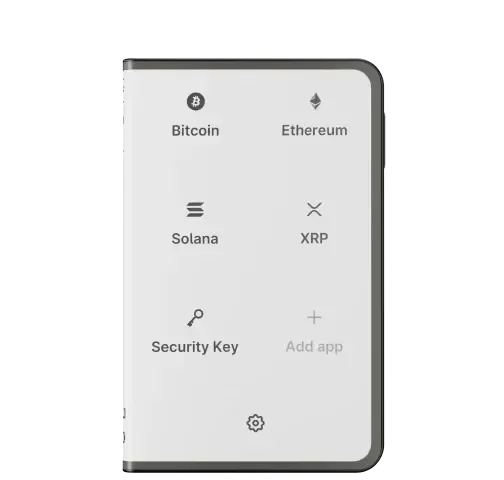
The Stax is the flagship, designed with Tony Fadell — the engineer behind the iPod and Nest. Its distinguishing feature is a curved E Ink display that wraps around the edge of the device, so a name or image remains visible along the spine when it is set down or stacked. The devices are magnetic and designed to stack, which is where the name comes from.
Functionally it does what the Flex does. Same signing model, same Secure Element, same Ledger Live, a comparable touchscreen experience. The $150 over a Flex buys industrial design, the curved display and the stacking magnets — not additional protection for your keys.
That is worth stating plainly, because the price ladder invites the assumption that the expensive device is the safe one. It is not. A Nano S Plus at $59 and a Stax at $399 defend your private keys identically. What differs is how much you enjoy the object and how easily you can read what you are signing.
Buy it if: you want the flagship and the design appeals to you. It is a legitimate reason to buy something. Just do not buy it believing it protects funds a cheaper Ledger would not.
Strip away the marketing and the decision comes down to how you will use it.
You are buying your first hardware wallet to hold Bitcoin or a handful of major coins long-term. Nano S Plus, $59. You will move funds a few times a year. The screen is small, and it will not matter, because you will barely look at it. Spend the difference on the coins.
You manage crypto from your phone. Nano X at $99, or Gen5 at $179 if the small screen bothers you. Bluetooth is the whole point; without it, phone signing means carrying a cable and an adapter, and you will stop doing it.
You use DeFi, hold NFTs, or sign several transactions a week. Flex, $249. This is the one recommendation in the list where the extra money buys something that genuinely bears on safety — not through better cryptography, but because a screen you can actually read is a screen you actually read.
You have a large portfolio and want the best device made. Stax, $399. Understand what you are paying for.
You are holding a genuinely significant amount. Buy two devices, from different sources, and treat one as a tested backup. The failure mode that ends people is not a broken chip, it is a lost recovery phrase with no second path to the funds.
The setup takes twenty minutes and almost all of the risk in owning a hardware wallet is concentrated in it. Get this right and the device does its job for years.
Paper in a safe place is the baseline, and it is genuinely fine for most people. Its weakness is fire and water, which is why steel backup plates exist: you stamp the words into metal that survives a house fire. For meaningful holdings that is a sensible fifty dollars.
Splitting the phrase across two locations — twelve words each — sounds clever and usually is not. It halves the chance of theft and doubles the chance that you lose access permanently, and permanent loss is by far the more common outcome. Unless you have a specific reason and a tested plan, keep the phrase intact in one secure place, or hold two complete copies in two secure places.
Every Ledger supports an optional passphrase — sometimes called a 25th word. It is a string you choose, and it creates an entirely separate wallet derived from your 24 words plus that string. Change one character and you get a different wallet, with different addresses, holding nothing.
The point is that your recovery phrase alone no longer opens the real wallet. Somebody who finds your paper, or coerces you into surrendering it, reaches a wallet that can hold a modest decoy balance while the actual holdings sit behind a passphrase that exists only in your memory.
The danger is symmetrical and severe: there is no recovery for a forgotten passphrase. None. It is not stored anywhere, Ledger cannot help, and the funds behind it are gone as completely as if you had burned the phrase. Use it if you genuinely understand this trade-off, and be certain you will remember the exact string — including capitalisation and spacing — years from now.
This is also where a touchscreen device earns part of its price. Entering a long passphrase by clicking through the alphabet with two buttons is unpleasant enough that people choose weak ones or abandon the feature entirely.
No review is worth reading if it omits the parts the manufacturer would rather you skipped. There are two, and neither is a reason to avoid the product — but you should decide that yourself, with the facts.
In July 2020 Ledger's e-commerce and marketing database was breached. The keys were never at risk — the breach touched the shop, not the devices — but the exposed data included customer names, email addresses, phone numbers and, for a subset, physical delivery addresses. That information was later published.
The consequences were serious and long-lived. Customers received phishing emails that were convincing precisely because the sender knew they owned a hardware wallet. Some received physical letters, and in a number of cases counterfeit devices in the post, packaged to look official and shipped with a pre-filled recovery phrase card. People lost real money to it.
What this means for you practically: treat every unsolicited message about your Ledger as hostile, without exception. Ledger will never email asking you to verify a recovery phrase. No legitimate device, service or support agent will ever need those 24 words. If a package arrives you did not order, do not connect it to anything.
In May 2023 Ledger announced Ledger Recover, an optional paid subscription that backs up your recovery phrase by encrypting it, splitting it into three fragments, and distributing those fragments among separate custodians. If you lose your phrase, an identity check reassembles it.
The reaction was severe. The objection was not the price but the premise: users had been told for years that the seed could never leave the Secure Element, and here was a firmware capability that could extract it, however encrypted and however opt-in. Critics argued that if the firmware can do this at all, the guarantee was always conditional on Ledger's cooperation and on nobody ever compelling that firmware to behave differently.
Ledger's response was that the service is entirely optional, that the extraction only occurs with explicit user consent on the device, and that the firmware has always been something users trusted. That last point is true, and it is also exactly why the announcement unsettled people — it made an implicit trust explicit.
Where this leaves a buyer: Recover is opt-in, it costs money, and you can simply not subscribe. The devices work fully without it. But it is a real datapoint about the trust model you are accepting, and it is the honest reason some users moved to fully open-source alternatives. If your threat model includes a manufacturer being compelled by a government, that concern is coherent and Ledger is not the right device for you. For the overwhelming majority of owners, whose realistic threats are malware and phishing, it changes very little.
Related and worth stating: Ledger's firmware is not fully open source. The Secure Element code is closed, which the company attributes to the licensing terms attached to that class of chip. Parts of the stack, and Ledger Live, are open. Competitors that are fully open source generally do not use a Secure Element, and instead accept a weaker physical-attack profile in exchange for auditability.
That is a genuine engineering trade-off with no universally correct answer: verifiable code you can inspect, or tamper-resistant silicon you must trust. Which matters more depends on whether you fear a malicious manufacturer or a thief with your device in their hands.
The device is half the product. The other half is Ledger Live, the app you will open far more often than you will touch the hardware.
Its core job is unglamorous and important: show you what you hold, across every chain, in one place, and build transactions for the device to sign. Add an account for a chain, and Ledger Live scans the blockchain for addresses derived from your keys and reports the balances. Nothing sensitive is stored — reinstall it on a new computer, reconnect the device, and everything reappears, because the data lives on public blockchains and the keys live on the device.
Around that sit optional services, and it is worth being clear that these are third parties operating inside Ledger's interface rather than Ledger itself:
None of these are obligatory and none change the security model: every one still ends with a transaction you approve on the device screen. If you want a wallet and nothing else, ignore the tabs.
One habit worth forming from day one: when the device asks you to confirm, read the screen rather than the app. The app is the thing an attacker can change. The device is the thing they cannot. That single discipline is most of what separates people who own hardware wallets from people who own hardware wallets and still lose funds.
Ledger sells a range of add-ons alongside the devices. Most are optional; two are worth considering.
The accessory nobody sells that matters most is a steel plate for your recovery phrase. Paper is adequate until the day it is not.
Buy from Ledger directly, or from a reseller Ledger lists as authorised. That is the entire rule, and the reason is the supply chain.
A hardware wallet is one of the few consumer products where a tampered unit is catastrophic rather than annoying. A second-hand device, a marketplace listing, an unfamiliar shop with a suspiciously good price — any of these can be a device whose recovery phrase somebody already knows. It will work perfectly. It will receive your funds. And it will be emptied at a moment of the seller's choosing, possibly months later.
This is not hypothetical. After the 2020 data leak, counterfeit Ledgers were mailed to real customers at their real addresses, in convincing packaging, with a card of pre-written words inside. Some people used them.
Never buy a hardware wallet second-hand. Never use a recovery phrase you did not generate yourself. There is no exception to either rule.
Nothing, provided you have your 24 words. The device holds no unique data — it derives your keys from that phrase. Buy another Ledger, or any BIP39-compatible wallet, restore from the phrase, and your funds are there. The device is replaceable; the phrase is not.
Ledger Live communicates with blockchain nodes to display balances, and that traffic reveals which addresses are being queried. The company publishes a privacy policy covering this, and you can point Ledger Live at your own node if that concerns you. Your keys remain private regardless; what is potentially observable is activity, not control.
Yes. A single device holds apps for many chains simultaneously, limited by storage rather than by design — the Nano S Plus and newer models hold a substantial number of apps at once, and apps can be removed and reinstalled without any effect on your funds, because the keys come from the phrase, not the app.
Yes, and it is a sound backup strategy. Restoring the same phrase onto a second device gives you two devices controlling the same wallet. Keep the second one somewhere separate.
Keys are never transmitted over it. The link carries an unsigned transaction in and a signature out, and is treated as untrusted in the same way a USB cable is. You can disable it if you prefer.
Only the models with batteries, and only to use them. Your funds are on the blockchain, not on the device — a flat or dead Ledger loses nothing at all.
Your 24 words follow the BIP39 standard and work with wallets from other manufacturers and with open-source software wallets. You are not locked in. This is worth internalising: you are buying a signing device, not a custodian.
Ledger makes good hardware, and the security model is sound for the threats most owners actually face. The line-up is honestly differentiated once you see past the price ladder: the difference between $59 and $399 is screen and convenience, not the safety of your keys.
For most people buying a first device, the Nano S Plus at $59 is the right purchase and the extra money is better spent on the assets themselves. If you sign transactions often — DeFi, NFTs, anything where reading what you approve is the whole defence — the Flex at $249 is the one upgrade in the range that meaningfully affects your safety, because a screen you can read is a screen you will read.
The company's history has two blemishes worth knowing: a customer data breach in 2020 that still fuels targeted phishing, and the Ledger Recover announcement that made an implicit trust in the firmware explicit and unsettled people. Neither compromised anybody's keys. Both are legitimate inputs to your decision, and you should weigh them yourself rather than take a reviewer's word — including this one's.
Whatever you choose: buy it from the official shop, generate your own recovery phrase, write it on something that survives a fire, and never type those words into anything with a network connection. Do that, and the device does what you bought it for.
Published September 4, 2026
Planning purchases around the calendar can turn a regular price tag into a genuine bargain. In 2025, retailers will continue to align major sales with holidays, product cycles, and inventory clear‑outs, giving shoppers predictable windows of lower prices. Whether you’re eyeing the latest gadget, a new wardrobe, a vacation, or home upgrades, knowing when to click “add to cart” can save you a substantial chunk of change. Below is a month‑by‑month roadmap that blends seasonal trends with practical tips for comparing offers, spotting legitimate coupons, and avoiding the pitfalls of impulse buying.
After the holiday rush, many online stores slash prices to move excess inventory. Electronics, especially laptops, tablets, and wearables, often see their deepest discounts in the first two weeks of January. This is also the time when many subscription services roll out New Year promotions, which can be stacked with cash‑back offers.
While Valentine’s Day drives sales in jewelry and cosmetics, it also triggers early‑season fashion promotions. Mid‑range apparel brands often release “winter‑to‑spring” clearance sales in the second week, clearing out heavier coats before the spring inventory arrives. Look for bundled offers—such as “buy one, get the second at 30% off”—which can stretch your budget further.
Spring is prime time for travel bargains. Airlines and hotels typically publish fare‑drop calendars for the upcoming summer season, offering lower rates for bookings made 2–3 months ahead. Simultaneously, home‑improvement retailers begin spring clean‑out events, discounting outdoor furniture, gardening tools, and DIY kits. Aligning a vacation purchase with a home‑project sale can free up cash for both.
May marks the start of the major gaming release calendar, with publishers often offering pre‑order bonuses and limited‑time discounts. Early‑access bundles can include extra downloadable content at no additional cost. In June, summer clothing lines roll out, and many retailers clear out spring stock with “buy‑more‑save‑more” offers. Pairing a gaming purchase with a summer wardrobe upgrade can maximize coupon stacking opportunities.
The midsummer lull prompts retailers to run clearance events to free warehouse space. Expect deep cuts on midsize appliances, midsummer fashion, and outdoor gear. As August approaches, back‑to‑school sales dominate, delivering discounts on laptops, backpacks, and stationery. Planning larger household purchases for July and smaller tech buys for August can spread your spending while still catching discounts.
September sees a surge in beauty and wellness promotions, as brands aim to capture the post‑summer rejuvenation market. Skincare sets, fitness equipment, and health‑tech devices often feature bundled pricing. Additionally, savvy shoppers begin scouting early Black‑Friday deals; many retailers preview their holiday offers in late September, allowing price comparison before the rush.
Throughout the year, a disciplined approach to research pays off. Use price‑comparison tools, read recent customer reviews, and verify that any coupon code is still valid. Avoiding overpaying isn’t just about waiting for a sale; it’s about aligning product cycles, leveraging loyalty programs, and staying alert to limited‑time promotions.
Takeaway: Map your major purchases to the seasonal sales calendar, set alerts, and combine coupons with loyalty perks. By timing purchases to January tech clearances, spring travel windows, midsummer clearances, and back‑to‑school deals, everyday shoppers can consistently shave 10‑30% off regular prices without chasing every flash sale.
Published September 3, 2026
TradingView started as a charting tool and turned into the place a very large share of retail traders now actually work. Charts, screeners, alerts, a scripting language and a social feed sit in one browser tab, and the free tier is usable rather than a five-minute teaser. That combination is why you keep running into TradingView screenshots in every trading forum, newsletter and YouTube thumbnail.
This guide walks through what the platform does, what each paid tier genuinely adds over the free one, and how to work out which plan — if any — you need. No affiliate hype: most people reading this should stay on the free plan for a while, and the sections below explain exactly when that stops being true.
Three products share one interface. The first is the chart: an interactive price chart for stocks, futures, forex, crypto, indices, bonds and economic data, with drawing tools, hundreds of indicators and the ability to stack several instruments in one layout. The second is a set of screeners that filter thousands of instruments by fundamental and technical criteria. The third is a social network where traders publish annotated charts, and where the scripting community shares indicators.
What TradingView is not is a broker. You can connect a broker account and place orders through the chart, but TradingView itself does not hold your money. It sells data access and software features. Keeping that distinction clear matters when you compare its price to a broker's free platform: you are paying for tooling and data, not execution.
Price data arrives from exchanges and data vendors, and this is the single biggest driver of what a plan costs. Delayed data is cheap to distribute; real-time data from a specific exchange is licensed, and that licence is charged separately from the subscription itself. A trader who only needs end-of-day levels on large-cap US stocks has very different costs from someone scalping futures.
The free tier gives you an account, saved charts, one chart per layout, a limited number of indicators on that chart, the full screener, the community feed and the mobile apps. No credit card is requested at sign-up. For a swing trader who looks at a handful of instruments a few times a week, this is often the whole job.
The limits that people hit first are the number of indicators on one chart and the number of saved chart layouts. If you run a setup with a moving-average ribbon, a volume profile, an oscillator and a custom script, you will bump into the indicator ceiling quickly. If you keep separate layouts for different markets, you will hit the layout ceiling.
The second limit is alerts. Free accounts get a small number of active server-side alerts. Server-side matters: the alert fires whether or not your browser is open, which is the difference between a useful alert and a reminder you have to babysit.
The third is advertising. The free tier shows ads in the interface. It is not aggressive, but it is there.
TradingView's paid plans differ mostly by quantity rather than by kind: more indicators per chart, more charts per layout, more alerts, more saved layouts, and access to shorter intervals. Understanding that saves money, because the question stops being "which plan is best" and becomes "which ceiling do I keep hitting".
The entry paid tier removes ads, raises the indicator count per chart and lets you keep several charts in one layout. For most people who have outgrown free, this is the plan that solves the actual problem. It is the right first upgrade if your complaint is "I cannot fit my indicators" or "I want my four majors side by side".
The middle tier raises the same ceilings further and adds more simultaneous alerts. It suits traders watching many instruments at once, or anyone running a rules-based approach where each rule is an alert rather than something you watch for manually.
The top consumer tier gives the highest limits on indicators, layouts and alerts, the longest alert expiry, second-based intervals and priority support. Second-based charts matter to a specific group — very short-term traders — and are close to irrelevant for everyone else. If you are not trading intraday on seconds, the honest answer is that Premium is a comfort purchase.
Every paid tier is cheaper per month when billed annually. The saving is meaningful but it is a commitment, so the sensible sequence is: run monthly for a couple of months, confirm the platform has become part of your routine, then switch to annual. Paying for a year of software you use twice is the most common way people waste money here.
The chart is the reason the platform exists, and it is genuinely good. A few features are worth learning deliberately because they change how fast you work.
A layout is a saved arrangement of charts, indicators, drawings and symbols. Building one layout per workflow — "US large caps daily", "crypto majors 4h", "FX intraday" — and switching between them is far faster than reconfiguring one chart repeatedly. On the free plan you get one chart per layout; paid tiers let you tile two, four or eight.
Beyond trend lines, the tools most under-used by newcomers are the measurement tool, which reports price change, percentage and bar count in one drag, and the long/short position tool, which draws a trade with its stop and target and tells you the risk-reward ratio before you commit. Using the position tool on every idea is the cheapest discipline upgrade available on the platform.
Bar replay steps a chart forward one bar at a time from a chosen historical date. It is the closest thing to practice the platform offers: you see the setup form without knowing what happens next. Replay is available on the free tier for daily data and extends to intraday on paid plans.
TradingView ships with the standard set — moving averages, RSI, MACD, Bollinger Bands, volume profile and several hundred more — but the interesting part is the community library. Tens of thousands of user-published indicators are searchable from the chart, and most are free to add.
Behind them sits Pine Script, TradingView's own scripting language. It is deliberately narrow: it exists to describe indicators and strategies, not to be a general programming language, and that constraint makes it learnable in an evening if you have written any code before. A simple moving-average crossover indicator is roughly ten lines.
Two practical warnings about community scripts. First, an indicator that repaints — one that changes its historical signals as new data arrives — will look astonishingly accurate in hindsight and be useless live. Check whether a script repaints before trusting it. Second, backtest results published in a script's description are marketing, not evidence; run the strategy tester yourself on your own instrument and timeframe.
There are separate screeners for stocks, crypto, forex, futures and bonds, and they are underused relative to how good they are. The stock screener filters on fundamentals — market cap, P/E, revenue growth, sector — and on technical state at the same time, so "profitable US industrials above their 200-day moving average with rising volume" is a single query.
Screener results can be opened directly as a chart list, which turns a filter into a review queue: run the screen in the morning, click through the results, keep the three that look worth watching. That loop is the practical value of the platform for most swing traders, and it works on the free plan.
Alerts fire on price levels, on indicator conditions, on drawing-tool touches and on custom script conditions, and they run on TradingView's servers rather than in your browser. They can notify by app push, email, SMS on some plans, or by webhook.
Webhooks are the feature that quietly justifies a subscription for a certain kind of user: an alert can POST to a URL you control, which means TradingView can drive an external system — a bot, a spreadsheet, a notification pipeline — without you watching a screen. If that is your use case, alert count and alert expiry are the specifications to compare, not chart cosmetics.
The built-in paper trading account lets you place simulated orders directly from the chart with a fictional balance. It uses real market data, so the fills are approximately realistic on liquid instruments, and it is the fastest way to test whether you can follow your own rules before money is involved.
Beyond simulation, TradingView integrates with a list of supported brokers, letting you route live orders from the chart. Whether this is useful depends entirely on your broker being on the list and on the order types you need being supported. Check both before assuming it replaces your broker's platform.
Every chart can be published with annotations and a written thesis, and the feed ranks published ideas by instrument. Treated as a source of signals, this is a fast way to lose money. Treated as a source of counter-arguments — reading what people who disagree with your position are looking at — it is genuinely useful, and free.
The other honest use is education: watching how experienced traders mark up a chart teaches structure faster than reading about it. Ignore the performance claims; look at the reasoning.
You check charts a few times a week, you follow fewer than a dozen instruments, you use three or four indicators, and you do not need real-time exchange data. This describes most long-term investors and a good share of swing traders. There is no time limit on the free tier and no card on file.
You keep hitting the indicator limit on a single chart, or you want two to four charts visible at once, or the ads have started to annoy you. This is the upgrade that solves a concrete daily irritation rather than an aspirational one.
You run many alerts simultaneously, you need long alert expiry, you drive external systems through webhooks, or you trade on second-based intervals. These are specific, checkable needs. If you cannot name which of them applies to you, you do not need the tier.
Four things reliably reduce what you pay. Start on free and let a real limitation push you up, rather than buying the tier you aspire to. Switch to annual billing only after two months of consistent use. Buy the real-time data add-on only for the exchange you actually trade, since these are licensed separately from the plan. And review the subscription every renewal: needs change, and the tier that fitted a year ago often no longer matches how you work.
The first is treating indicator count as a proxy for quality of analysis. A chart with eleven overlays is usually a sign of indecision rather than insight, and it is also the fastest way to convince yourself you need a higher tier.
The second is trusting community scripts without checking for repainting. The third is buying Premium for second-based charts that a swing trader will never open. The fourth is skipping the position tool, and therefore never seeing the risk-reward of an idea before taking it.
Yes, with a permanent free tier that includes charts, the screeners, the community feed and the mobile apps. Paid plans raise limits and remove ads; they are not required to use the platform.
No. It is a tier, not a trial, and no payment details are required to create the account.
Only for exchanges whose real-time feed you specifically need. Data licences are charged separately from the subscription, so many users run a paid plan with delayed data and add real-time only for the one market they trade.
Through a connected supported broker, yes. TradingView itself is not a broker and does not hold funds.
It is narrow by design. If you have written code in any language, a first working indicator takes an evening. If you have not, expect a weekend to get comfortable with the basics.
Only after you have confirmed the habit. The per-month price is lower, but it is a year's commitment — run monthly first, then switch.
TradingView is the strongest charting and screening environment available to retail traders, and its free tier is good enough that most people should start there and stay until something specific breaks. When you do upgrade, upgrade against a limit you have actually hit — indicators per chart, charts per layout, alert count — rather than against a feature list. That single habit is worth more than any discount.
A watchlist in TradingView is more than a list of tickers. Lists can be coloured, flagged and sorted by any column — change, volume, market cap — and they sync across the web, desktop and mobile apps. The productive pattern is one list per intent rather than one giant list: a "core holdings" list you check weekly, a "setups forming" list you check daily, and a "just interesting" list you prune monthly.
Flagging is the underrated part. Coloured flags let you mark state inside a list — say, green for "trigger hit, waiting for confirmation" and red for "invalidated" — so the list itself carries your reasoning instead of living in a separate notebook. On the free plan you get watchlists and flags; the paid tiers do not gate this, which is worth knowing before you upgrade for organisational reasons.
Lists can be imported from a plain text file of symbols, which matters if you are migrating from a broker platform or a spreadsheet. Symbols need their exchange prefix to resolve unambiguously — NASDAQ:AAPL rather than bare AAPL — because the same ticker often exists on several exchanges with different prices and currencies.
Price is the headline, but a good deal of what separates a useful chart from a decorative one sits underneath it. Volume profile shows how much was traded at each price rather than in each time period, which turns "the price went there" into "the price spent real activity there". Areas of high traded volume tend to act as reference points on later visits; areas of low volume tend to be crossed quickly.
Volume profile in its richer forms — session profiles, visible-range profiles, fixed-range profiles — is partly gated behind paid tiers, and this is one of the few cases where the paid feature does something the free one cannot approximate. If your method leans on where volume traded rather than when, price this feature specifically rather than buying a tier for its general reputation.
Market internals — advance/decline lines, index breadth, volatility indices — are available as regular symbols and can be added to any layout. Charting the index alongside its breadth is a two-minute setup that tells you whether a move is broad or carried by a handful of names.
The habit that most improves chart reading is looking at the same instrument on more than one timeframe before deciding anything. TradingView supports this in three ways, and they suit different people.
The first is a tiled layout with the same symbol at different intervals — daily, four-hour, one-hour side by side — with symbol linking switched on, so changing the ticker in one pane changes it everywhere. The second is multi-timeframe indicators, which plot a higher-timeframe value on a lower-timeframe chart, keeping you on one pane. The third is simply pressing the interval shortcut and flipping between timeframes on a single chart, which costs nothing and works on the free plan.
Beginners tend to reach for the tiled layout and then upgrade for more charts per layout. Try the third approach first for a week. A surprising number of people find that flipping intervals on one chart is faster than scanning four panes, and it removes the reason to upgrade.
The web version is the full product. The desktop application wraps the same interface in a native shell, which brings two real advantages: multiple native windows across monitors, and no browser tab competing for memory with thirty others. It is free and available on Windows, macOS and Linux, and it is the right choice if you keep charts open all day.
The mobile apps are not a cut-down viewer. Charts, drawings, watchlists and alerts sync, and alerts arrive as push notifications, which is what makes server-side alerting worth setting up in the first place: you place the alert at your desk and receive it anywhere. Drawing precisely on a phone is fiddly, so the practical split is analysis on desktop, monitoring on mobile.
Broker-supplied platforms are free with an account and route orders natively, but their charting is usually weaker, their screeners narrower, and you are locked to instruments that broker carries. TradingView's advantage is that it is broker-agnostic and asset-agnostic: equities, futures, FX and crypto sit in the same interface with the same tools.
Dedicated professional terminals go far deeper on fundamentals, news and institutional data, and cost several orders of magnitude more. They are not competing for the same user.
Other retail charting tools compete on specific axes — some on futures-specific order-flow tooling, some on backtesting depth. TradingView's edge is breadth plus the community script library, and its weakness is that its strategy backtesting is convenient rather than rigorous. If your work is systematic and you need precise fill modelling and portfolio-level testing, plan to validate elsewhere and use TradingView for visualisation.
If you are starting from nothing, this sequence gets you to something useful in about an hour, entirely on the free plan.
Create the account and skip the plan-selection screen. Open a chart of an instrument you care about and set the interval to daily. Add two indicators only: a 200-period moving average and a volume histogram. Resist adding more — the point of starting narrow is that you learn what each one contributes.
Build one watchlist of ten to fifteen instruments you would genuinely consider trading or holding. Run the stock screener once with two filters — something fundamental and something technical — and add any result that interests you to a second list called "watching".
Set three alerts: one on a price level you would act at, one on a level that would invalidate your view, and one on an instrument you want to be told about but do not want to watch. Then use the long/short position tool to sketch a trade you are considering, and read the risk-reward number it gives you before doing anything else.
That is the whole loop: filter, watch, get told, size. Everything the paid tiers add is a way of doing more of it at once, which is only valuable once the loop itself is a habit.
Subscriptions renew automatically, so if you are testing, put the renewal date in a calendar. Plan changes are prorated, meaning you can move up mid-cycle without wasting what you paid. Exchange data licences are billed separately from the plan and are per-exchange, which is the part of the bill people most often misjudge — a plan upgrade does not automatically give you real-time data for every market you look at.
Finally, the free tier is not a trap designed to break at the worst moment. It has been generous for years, and a large share of the platform's users never pay. Treat the paid plans as tools for a specific job rather than as membership, and you will spend the right amount.
Published June 23, 2026
When it comes to significant household purchases like major appliances, timing can be everything. A little foresight and understanding of retail cycles can lead to substantial savings, often hundreds or even thousands of dollars. Rather than rushing into a purchase when an old appliance breaks down, planning ahead allows you to capitalize on predictable sales events and strategic inventory clearances. This guide will help you navigate the best times of the year to buy everything from refrigerators to washing machines, ensuring you get the best value for your investment.
Retailers often synchronize their major sales with holidays, seasonal shifts, and new product releases. Knowing these windows can give you a significant advantage.
Beyond the general seasons, specific holiday weekends are reliable times for deep discounts across all major appliance categories. These are often the biggest sales events of the year.
Beyond the structured sales events, retailers are always looking to move inventory. Understanding these less predictable but equally valuable opportunities can save you money.
While price is a significant factor, a truly smart purchase involves more than just finding the lowest number. Consider these aspects to ensure long-term satisfaction and savings.
Once you've done your research and identified a potential deal, act decisively but prudently.
By understanding these seasonal rhythms and applying a bit of strategic thinking, you can transform the daunting task of buying major appliances into a smart, money-saving endeavor. Patience and preparation are your best tools for securing a great deal.
Published June 21, 2026
In the expansive world of video games, it's easy for costs to accumulate, whether through new releases, in-game purchases, or ongoing subscriptions. For many, gaming is a cherished hobby, offering entertainment and connection. However, enjoying this pastime doesn't have to break the bank. With a thoughtful approach to buying, playing, and managing your digital entertainment, you can significantly enhance your gaming experience while keeping your finances in check.
This guide will equip you with practical strategies to navigate the gaming landscape, ensuring you get the most out of every dollar spent. From understanding pricing cycles to optimizing subscription services, learn how to make smart choices that maximize both your fun and your savings.
One of the most effective ways to save on games is by understanding their typical pricing lifecycle. New releases command premium prices, but these often drop significantly within months. Patience is a virtue in game buying.
Subscription services have become a cornerstone of modern gaming, offering vast libraries for a recurring fee. While convenient, they can also become a hidden drain if not managed wisely.
The gaming world offers numerous opportunities to play without spending a dime, or at least very little, if you know where to look.
Beyond the base game, in-game purchases and expansions can quickly add up. Thoughtful management here is key to avoiding overspending.
Before finalizing any digital or physical game purchase, always take a moment to explore potential additional savings.
By adopting these smart shopping habits, you can enjoy your passion for gaming to its fullest without overstretching your budget. A little planning and patience go a long way in turning potential expenses into significant savings, allowing you to build an impressive game library and experience new adventures more affordably.
Published June 18, 2026
Buying furniture, whether for a new home or simply to refresh an existing space, can be a significant investment. The sheer variety of styles, materials, and price points can be overwhelming, making it easy to overspend or end up with pieces that don't quite meet your needs. However, with a strategic approach, you can furnish your home beautifully and functionally without emptying your wallet. This guide will walk you through smart shopping tactics to help you find quality furniture at prices that make sense.
Impulse buys are rarely a good idea when it comes to furniture. Taking the time to plan will not only save you money but also ensure the pieces you choose integrate seamlessly into your home.
While saving money is important, compromising on quality can lead to more expense down the line. A seemingly good deal on a poorly constructed piece might mean replacing it sooner than expected.
Furniture retailers often follow predictable sales cycles. Knowing when to buy can lead to significant discounts.
Beyond sales events, there are other ways to ensure you're getting the best possible price and value.
The cost of getting your furniture home and the ability to return it if it doesn't work out are critical factors often overlooked.
By approaching furniture shopping with a clear plan, an understanding of quality, and an eye for timing and deals, you can transform your home beautifully and affordably. Happy furnishing!
Yes. There are currently 2 active Cosm offers on WaveDeals, with savings up to 15% OFF.
Click “Show Code” on the offer you want above to reveal and copy it, then paste the code into the promo box at Cosm checkout and apply it before paying.
We list 2 Cosm codes and deals that our team checks regularly. Codes that stop working are removed.
The top Cosm offer right now saves you 15% OFF. Reveal the code above to use it.
Daily. This page was last refreshed on September 14, 2026, and our automated sync adds new Cosm codes as they go live.
Usually only one promo code applies per Cosm order, but you can often combine a code with an ongoing sale or free-shipping offer. Try the highest-value code first.
No reviews yet. If you have shopped at Cosm, yours would be the first — it helps the next reader decide.

I've been curating store pages like this “Cosm” one since 2016. Every code here is checked before it goes live — I look at what each shopping offer actually covers and flag anything with exclusions, then refresh the page as deals change. From what I see, shoppers save the most by stacking a working promo code with Cosm's seasonal sales. Just note that terms can be updated by Cosm at any time, and a few codes are region-specific.