15 active deals·5.0 (1)·Travel·Verified September 14, 2026
About Trip
Choose from over 1.2 million hotels in more than 200 countries, 30 million real guest reviews. Book flights to over 5,000 destinations worldwide. 24/7 Customer Service.
All Trip codes for September 2026 (15)
⚡Used one of these codes? Tap 👍 or 👎 on it — that's how the next shopper knows which Trip codes still work.
SAVE2K15% en vuelos desde la India con este código promocional Trip.com
CNBFLY25Extra 25% Off Flights w/ Canadia Bank Card
Trip deals: what's good, what to watch
What's good
5 coupon codes are live for Trip right now.
10 offers need no code at all — the discount applies through the link.
What to watch
2 of these are new-customer only, so check the terms before counting on one.
Offers are split across regions — check the currency in the terms before you use one.
Why check Trip codes here
We track 15 live offers
for Trip in Travel, the best of them worth $70 OFF.
The list was last checked against the merchant's feed on September 14, 2026, and codes that stop
working are dropped rather than left on the page to pad the count. Where a code is exclusive to new
customers or capped at a maximum discount, the terms say so above — you should not have to reach the
checkout to find that out.
How to use a Trip promo code
Browse the verified Trip promo codes above and pick the offer that fits your order.
Click “Show Code” to reveal the coupon — it’s copied to your clipboard automatically.
Head to Trip and add the items you want to your shopping cart.
At checkout, paste the code into the promo or coupon code box and apply it.
Confirm the discount is reflected in your total, then complete your purchase.
Tips to save more at Trip
Check this page before every Trip order — we refresh codes daily and remove expired ones.
Stack a coupon with Trip seasonal sales and clearance for the deepest savings.
Sign up for the Trip newsletter to unlock first-order and members-only discounts.
Look for free-shipping thresholds — adding a small item often pays for itself.
Try a couple of codes at checkout; the one with the highest saving wins.
If you own cryptocurrency and it sits on an exchange, you do not really own it. You own an entry in someone else's database, and a promise. That distinction has cost people everything more than once — Mt. Gox, QuadrigaCX, Celsius, FTX. Every one of those collapses ended the same way: users who held coins on the platform discovered that "your balance" and "your coins" were never the same thing.
A hardware wallet is the answer to that problem. It is a small physical device that holds the private keys to your crypto and never lets them leave. When you want to send funds, the transaction is built on your computer or phone, passed to the device, signed inside it, and passed back. The key itself never touches an internet-connected machine. Malware on your laptop can watch you type, read your clipboard and screenshot your screen, and still walk away with nothing.
Ledger is the most widely used maker of these devices. The company is French, founded in 2014, and has shipped several million units. This guide covers its full 2026 line-up — five devices at five price points — explains what actually differs between them, and is honest about the two episodes in the company's history that a buyer deserves to know about before spending money.
What a hardware wallet actually protects you from
It is worth being precise here, because hardware wallets are often sold with vague promises of "security" that do not tell you where the boundary lies.
A hardware wallet protects you from: malware on your computer that steals wallet files or keystrokes; a compromised browser extension that swaps a destination address; a phishing site that convinces you to paste a recovery phrase into a web form (assuming you refuse, which the device is designed to make easy); and physical theft of your laptop or phone.
A hardware wallet does not protect you from: approving a malicious transaction because you did not read the screen; losing your recovery phrase; writing that phrase into a photo, a password manager, or a cloud note; a scam that persuades you to send funds voluntarily; or someone with physical access to both the device and its PIN.
That last group matters more than the first, because in practice most people who lose crypto while owning a hardware wallet lose it to the second list. The device removes one very specific class of attack — remote key extraction — and leaves your judgement responsible for everything else. Any review that tells you a hardware wallet makes you safe, full stop, is selling something.
How a Ledger device works
Every Ledger contains a Secure Element — the same category of tamper-resistant chip used in passports and bank cards. It is built to resist physical attacks: probing the silicon, glitching the power supply, reading the chip under a microscope. Your private keys are generated inside it and are designed never to come out.
Alongside the Secure Element runs Ledger's own operating system, BOLOS, which keeps each cryptocurrency app isolated from the others. An app for one chain cannot read the keys used by another. This is why a single device can hold Bitcoin, Ethereum, Solana and a long list of others without those apps being able to interfere with each other.
When you first set the device up, it generates a 24-word recovery phrase. This follows the BIP39 standard, which means it is not Ledger-specific: those 24 words are the actual master key to your funds, and they would restore your wallet on a competing device from another manufacturer. This is the single most important object you will handle. Everything else — the device, the PIN, the app — is replaceable. The phrase is not.
Day-to-day you interact through Ledger Live, the desktop and mobile app that shows balances, builds transactions, and handles buying, swapping and staking through integrated third-party providers. Ledger Live never sees your keys. It prepares a transaction and asks the device to sign it; you verify the details on the device's own screen and physically confirm.
That last step is the heart of the design and the reason screen size matters more than it first appears. The device screen is the only display in the chain that malware cannot alter. If your computer is compromised and shows you one destination address while sending another, the device screen is where the discrepancy becomes visible — but only if you actually read it, and only if the screen is large enough to show the whole address and the full context of what you are approving.
The 2026 Ledger line-up at a glance
Five devices, from $59 to $399. The jump in price does not buy you more security — every model uses a Secure Element and the same underlying key handling. What it buys is screen, connectivity, and how pleasant the thing is to actually use.
Model
Price
Screen
Connection
Best for
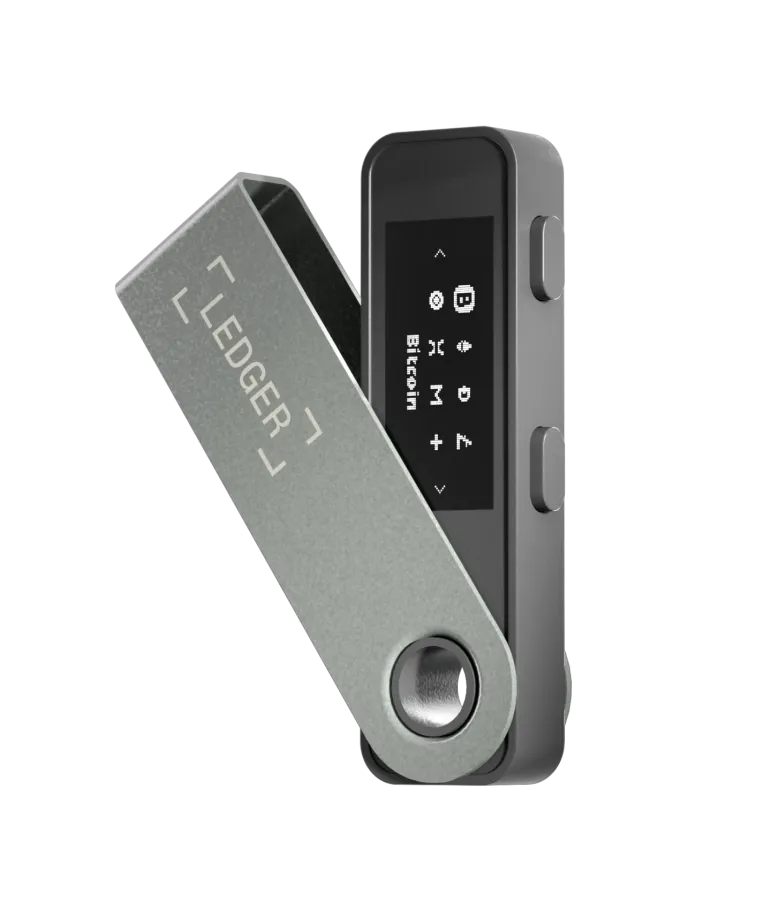
Nano S Plus
$59
Small monochrome, buttons
USB-C
First device, long-term storage
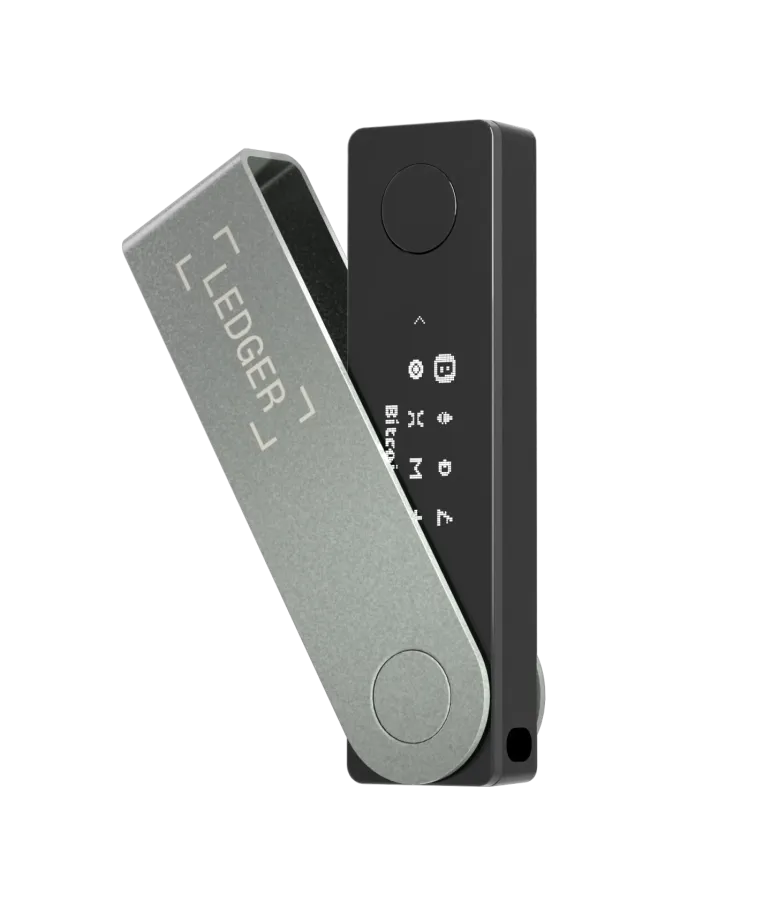
Nano X
$99
Small monochrome, buttons
USB-C + Bluetooth
Signing from a phone
Nano Gen5
$179
Larger, colour
USB-C + Bluetooth
The current mainstream Nano
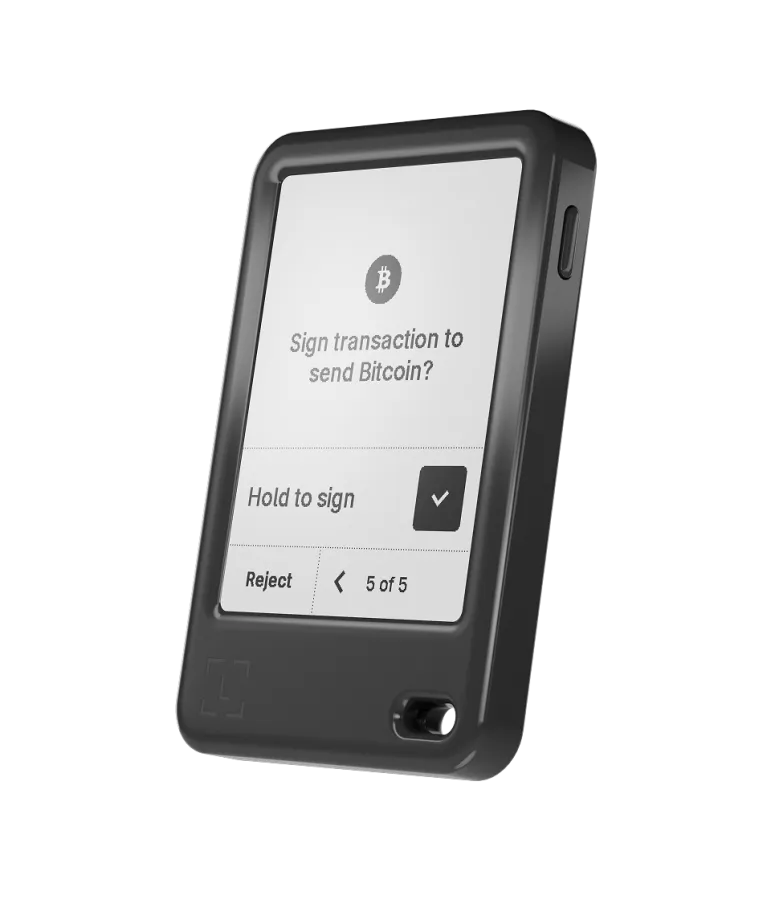
Flex
$249
2.8″ E Ink touchscreen, Gorilla Glass
USB-C + Bluetooth
Frequent use, NFT and DeFi signing
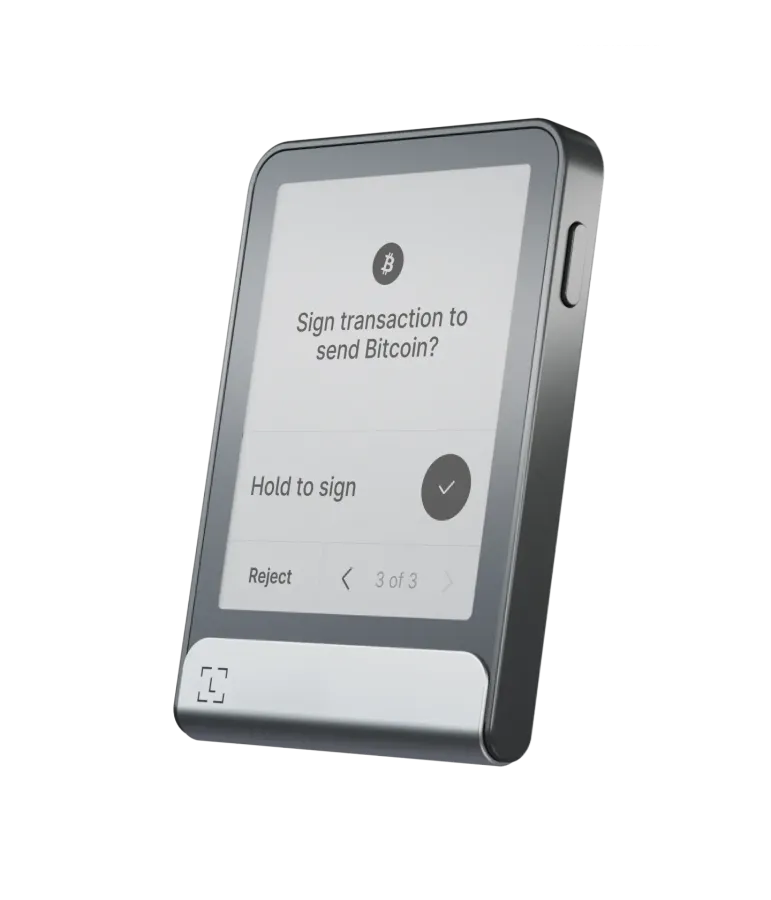
Stax
$399
Curved E Ink touchscreen
USB-C + Bluetooth
Those who want the flagship
Prices are Ledger's own listed prices at the time of writing and exclude shipping and local taxes. Colour and special editions vary by a few dollars — the Flex Bonk Edition, for instance, lists at $259 rather than $249.
Ledger Nano S Plus — $59
The Nano S Plus: the cheapest way into genuine self-custody, and the one most people should start with.
The Nano S Plus is the entry point and, for a large share of buyers, the correct answer. It has a small monochrome display and two physical buttons. You scroll with the buttons, confirm by pressing both. There is no Bluetooth: it connects by USB-C to a computer or, with the right cable, to a phone.
What matters is what it does not compromise on. The Secure Element is there. The 24-word phrase is generated the same way. The signing model is identical to the $399 device. A transaction signed on a Nano S Plus is exactly as valid and exactly as protected as one signed on a Stax.
The trade-off is the experience. Reading a long Ethereum contract interaction on a screen that shows a handful of characters at a time is genuinely tedious, and tedium is a security problem: people who find verification annoying start skipping it. If you are going to interact with DeFi protocols weekly, that friction will eventually cost you attention at the wrong moment.
Buy it if: you are buying Bitcoin or a few major assets and intend to hold them, moving funds rarely. For that use, spending more is spending on convenience you will not use.
Ledger Nano X — $99
The Nano X adds Bluetooth, which is what makes signing from a phone practical.
The Nano X is the Nano S Plus with Bluetooth and a larger battery. That sounds minor and is not: it changes where you can use the device. With Bluetooth you can sign from Ledger Live on a phone without carrying a cable and without an adapter, which is the difference between a device you use and a device that lives in a drawer.
Bluetooth raises an obvious question, and the answer is reassuring: the pairing carries only the transaction to be signed and the signature that comes back. Private keys are never transmitted over it, by design — the wireless link is treated as untrusted in the same way the USB link is. An attacker in Bluetooth range gains the ability to be annoying, not the ability to steal.
Buy it if: you manage crypto mostly from your phone, or you travel and want to check and move funds without carrying accessories.
Ledger Nano Gen5 — $179
The Nano Gen5 is the newest Nano, with a considerably larger screen than the models it succeeds.
The Gen5 is the current generation of the Nano line and sits at $179, between the Nano X and the Flex. The headline change is the display: substantially larger and in colour, which addresses the single biggest complaint about the older Nanos. It keeps Bluetooth and USB-C, and it accepts the Magnet Folio and Badges accessories Ledger sells alongside it.
Where it lands for a buyer is straightforward. If the small Nano screen is what has put you off, but $249 for a Flex is more than you want to spend, this is the device that exists to fill that gap. If you were content with a Nano X, the Gen5 is a comfort upgrade rather than a security one.
Ledger Flex — $249
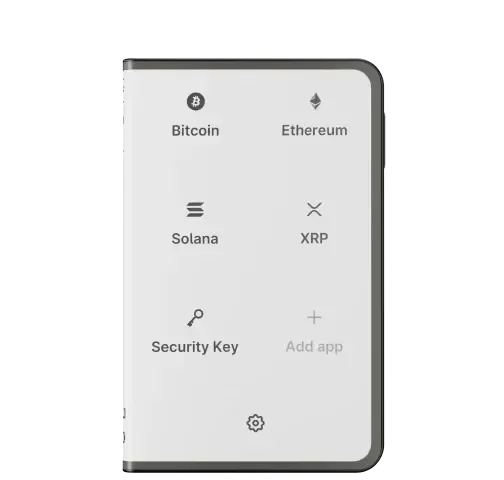
The Flex: a 2.8″ E Ink touchscreen behind Gorilla Glass, and the point at which verification stops being a chore.
The Flex is where the line-up changes character. It has a 2.8-inch E Ink touchscreen behind Gorilla Glass, and you operate it by touch rather than by clicking through with buttons. Ledger includes a Recovery Key with it.
E Ink is an unusual choice for a device like this and a deliberate one. It holds an image without drawing power, so the screen can display an address indefinitely while you check it against another source. It stays readable in direct sunlight. And it draws so little power that battery life is measured in a way that makes the device practical to keep in a bag rather than on a charger.
The practical gain is verification. On a Nano, checking a long address means scrolling through it in fragments and holding the pieces in your head. On the Flex the whole thing is on screen at once, next to the amount and the contract you are interacting with. If you sign transactions regularly — and especially if you touch DeFi, where what you are approving is often a permission rather than a payment — this is the difference between actually reading the screen and developing the habit of pressing confirm.
Touch input also makes entering a passphrase bearable. On a two-button device, typing a long alphanumeric string means clicking through the alphabet one character at a time. Anyone who has done it once understands why passphrase adoption is low among Nano owners.
Buy it if: you sign transactions more than occasionally, hold NFTs, or use DeFi protocols where reading exactly what you are approving is the whole game.
Ledger Stax — $399
The Stax and its curved wrap-around E Ink display — the flagship, and the one whose case for itself is aesthetic as much as functional.
The Stax is the flagship, designed with Tony Fadell — the engineer behind the iPod and Nest. Its distinguishing feature is a curved E Ink display that wraps around the edge of the device, so a name or image remains visible along the spine when it is set down or stacked. The devices are magnetic and designed to stack, which is where the name comes from.
Functionally it does what the Flex does. Same signing model, same Secure Element, same Ledger Live, a comparable touchscreen experience. The $150 over a Flex buys industrial design, the curved display and the stacking magnets — not additional protection for your keys.
That is worth stating plainly, because the price ladder invites the assumption that the expensive device is the safe one. It is not. A Nano S Plus at $59 and a Stax at $399 defend your private keys identically. What differs is how much you enjoy the object and how easily you can read what you are signing.
Buy it if: you want the flagship and the design appeals to you. It is a legitimate reason to buy something. Just do not buy it believing it protects funds a cheaper Ledger would not.
Which one should you actually buy
Strip away the marketing and the decision comes down to how you will use it.
You are buying your first hardware wallet to hold Bitcoin or a handful of major coins long-term. Nano S Plus, $59. You will move funds a few times a year. The screen is small, and it will not matter, because you will barely look at it. Spend the difference on the coins.
You manage crypto from your phone. Nano X at $99, or Gen5 at $179 if the small screen bothers you. Bluetooth is the whole point; without it, phone signing means carrying a cable and an adapter, and you will stop doing it.
You use DeFi, hold NFTs, or sign several transactions a week. Flex, $249. This is the one recommendation in the list where the extra money buys something that genuinely bears on safety — not through better cryptography, but because a screen you can actually read is a screen you actually read.
You have a large portfolio and want the best device made. Stax, $399. Understand what you are paying for.
You are holding a genuinely significant amount. Buy two devices, from different sources, and treat one as a tested backup. The failure mode that ends people is not a broken chip, it is a lost recovery phrase with no second path to the funds.
Setting it up without making the common mistakes
The setup takes twenty minutes and almost all of the risk in owning a hardware wallet is concentrated in it. Get this right and the device does its job for years.
Check the box before you open it. Ledger devices ship without a factory seal by design — the company relies on a cryptographic attestation instead, which Ledger Live performs when you first connect. A genuine device proves itself to Ledger's servers using a key burned into the Secure Element. Trust that check, not a sticker.
Never accept a pre-filled recovery phrase. If a device arrives with a card carrying 24 words already written on it, you are holding a scam. The phrase is generated by the device, by you, at setup. Somebody sending you a phrase is sending you a wallet they can empty whenever they choose. This attack is common enough that it deserves to be the loudest sentence in this guide.
Generate the phrase and write it on paper. The device shows 24 words in order. Write them down. Then let it quiz you on a few and confirm you copied them correctly.
Never photograph it, type it, or store it digitally. Not a phone photo, not a password manager, not a cloud note, not an encrypted file, not a draft email to yourself. The moment those words exist in any device connected to a network, you have undone the reason you bought the wallet.
Set a PIN you have not used elsewhere. Three wrong attempts wipes the device — which is the correct behaviour, and harmless, because the recovery phrase restores it.
Send a small amount first. Then restore from your phrase and check it works. Most people skip this step. It is the only way to find out that your copy of the phrase is wrong while that discovery is still cheap.
Where to keep the phrase
Paper in a safe place is the baseline, and it is genuinely fine for most people. Its weakness is fire and water, which is why steel backup plates exist: you stamp the words into metal that survives a house fire. For meaningful holdings that is a sensible fifty dollars.
Splitting the phrase across two locations — twelve words each — sounds clever and usually is not. It halves the chance of theft and doubles the chance that you lose access permanently, and permanent loss is by far the more common outcome. Unless you have a specific reason and a tested plan, keep the phrase intact in one secure place, or hold two complete copies in two secure places.
The passphrase: the feature worth understanding
Every Ledger supports an optional passphrase — sometimes called a 25th word. It is a string you choose, and it creates an entirely separate wallet derived from your 24 words plus that string. Change one character and you get a different wallet, with different addresses, holding nothing.
The point is that your recovery phrase alone no longer opens the real wallet. Somebody who finds your paper, or coerces you into surrendering it, reaches a wallet that can hold a modest decoy balance while the actual holdings sit behind a passphrase that exists only in your memory.
The danger is symmetrical and severe: there is no recovery for a forgotten passphrase. None. It is not stored anywhere, Ledger cannot help, and the funds behind it are gone as completely as if you had burned the phrase. Use it if you genuinely understand this trade-off, and be certain you will remember the exact string — including capitalisation and spacing — years from now.
This is also where a touchscreen device earns part of its price. Entering a long passphrase by clicking through the alphabet with two buttons is unpleasant enough that people choose weak ones or abandon the feature entirely.
Two things about Ledger a buyer deserves to know
No review is worth reading if it omits the parts the manufacturer would rather you skipped. There are two, and neither is a reason to avoid the product — but you should decide that yourself, with the facts.
The 2020 customer data breach
In July 2020 Ledger's e-commerce and marketing database was breached. The keys were never at risk — the breach touched the shop, not the devices — but the exposed data included customer names, email addresses, phone numbers and, for a subset, physical delivery addresses. That information was later published.
The consequences were serious and long-lived. Customers received phishing emails that were convincing precisely because the sender knew they owned a hardware wallet. Some received physical letters, and in a number of cases counterfeit devices in the post, packaged to look official and shipped with a pre-filled recovery phrase card. People lost real money to it.
What this means for you practically: treat every unsolicited message about your Ledger as hostile, without exception. Ledger will never email asking you to verify a recovery phrase. No legitimate device, service or support agent will ever need those 24 words. If a package arrives you did not order, do not connect it to anything.
Ledger Recover
In May 2023 Ledger announced Ledger Recover, an optional paid subscription that backs up your recovery phrase by encrypting it, splitting it into three fragments, and distributing those fragments among separate custodians. If you lose your phrase, an identity check reassembles it.
The reaction was severe. The objection was not the price but the premise: users had been told for years that the seed could never leave the Secure Element, and here was a firmware capability that could extract it, however encrypted and however opt-in. Critics argued that if the firmware can do this at all, the guarantee was always conditional on Ledger's cooperation and on nobody ever compelling that firmware to behave differently.
Ledger's response was that the service is entirely optional, that the extraction only occurs with explicit user consent on the device, and that the firmware has always been something users trusted. That last point is true, and it is also exactly why the announcement unsettled people — it made an implicit trust explicit.
Where this leaves a buyer: Recover is opt-in, it costs money, and you can simply not subscribe. The devices work fully without it. But it is a real datapoint about the trust model you are accepting, and it is the honest reason some users moved to fully open-source alternatives. If your threat model includes a manufacturer being compelled by a government, that concern is coherent and Ledger is not the right device for you. For the overwhelming majority of owners, whose realistic threats are malware and phishing, it changes very little.
The open-source question
Related and worth stating: Ledger's firmware is not fully open source. The Secure Element code is closed, which the company attributes to the licensing terms attached to that class of chip. Parts of the stack, and Ledger Live, are open. Competitors that are fully open source generally do not use a Secure Element, and instead accept a weaker physical-attack profile in exchange for auditability.
That is a genuine engineering trade-off with no universally correct answer: verifiable code you can inspect, or tamper-resistant silicon you must trust. Which matters more depends on whether you fear a malicious manufacturer or a thief with your device in their hands.
Living with it: what Ledger Live actually does
The device is half the product. The other half is Ledger Live, the app you will open far more often than you will touch the hardware.
Its core job is unglamorous and important: show you what you hold, across every chain, in one place, and build transactions for the device to sign. Add an account for a chain, and Ledger Live scans the blockchain for addresses derived from your keys and reports the balances. Nothing sensitive is stored — reinstall it on a new computer, reconnect the device, and everything reappears, because the data lives on public blockchains and the keys live on the device.
Around that sit optional services, and it is worth being clear that these are third parties operating inside Ledger's interface rather than Ledger itself:
Buy — card and bank purchases through integrated providers, delivered straight to an address your device controls. Convenient, and typically more expensive in fees and spread than buying on an exchange and withdrawing. You are paying for the shortcut.
Swap — exchanging one asset for another without an exchange account. Same trade-off: convenience against rate.
Stake — earning yield on proof-of-stake assets while the keys stay on your device. This is the feature where self-custody genuinely competes with an exchange, because you are not surrendering the coins to earn on them.
None of these are obligatory and none change the security model: every one still ends with a transaction you approve on the device screen. If you want a wallet and nothing else, ignore the tabs.
One habit worth forming from day one: when the device asks you to confirm, read the screen rather than the app. The app is the thing an attacker can change. The device is the thing they cannot. That single discipline is most of what separates people who own hardware wallets from people who own hardware wallets and still lose funds.
Accessories, and which are worth it
Ledger sells a range of add-ons alongside the devices. Most are optional; two are worth considering.
Magnet Folio — $39, for the Flex and the Nano Gen5. A magnetic cover that protects the screen. On a $249 device with a glass front that is carried around, this is reasonable insurance.
Protective Case — $29 for the Flex, $39 for the Nano X. Same argument, lower price.
Nano Gen5 Badges — $19. Cosmetic.
Stax Magnet Shell — $39. Cosmetic and protective.
Ledger Replace — from $8.99 for a Nano S Plus up to $49.99 for a Stax. A replacement programme for a lost or damaged device. Worth understanding clearly: this replaces hardware, it does not recover funds. Your recovery phrase does that. If you have the phrase you can restore to any device; if you do not, no replacement helps.
Gift card — from $53, if you are buying for somebody else and would rather they picked the model.
The accessory nobody sells that matters most is a steel plate for your recovery phrase. Paper is adequate until the day it is not.
Where to buy — the part that gets people robbed
Buy from Ledger directly, or from a reseller Ledger lists as authorised. That is the entire rule, and the reason is the supply chain.
A hardware wallet is one of the few consumer products where a tampered unit is catastrophic rather than annoying. A second-hand device, a marketplace listing, an unfamiliar shop with a suspiciously good price — any of these can be a device whose recovery phrase somebody already knows. It will work perfectly. It will receive your funds. And it will be emptied at a moment of the seller's choosing, possibly months later.
This is not hypothetical. After the 2020 data leak, counterfeit Ledgers were mailed to real customers at their real addresses, in convincing packaging, with a card of pre-written words inside. Some people used them.
Never buy a hardware wallet second-hand. Never use a recovery phrase you did not generate yourself. There is no exception to either rule.
Frequently asked questions
What happens if my Ledger breaks or I lose it?
Nothing, provided you have your 24 words. The device holds no unique data — it derives your keys from that phrase. Buy another Ledger, or any BIP39-compatible wallet, restore from the phrase, and your funds are there. The device is replaceable; the phrase is not.
Does Ledger know how much crypto I own?
Ledger Live communicates with blockchain nodes to display balances, and that traffic reveals which addresses are being queried. The company publishes a privacy policy covering this, and you can point Ledger Live at your own node if that concerns you. Your keys remain private regardless; what is potentially observable is activity, not control.
Can I use one device for several cryptocurrencies?
Yes. A single device holds apps for many chains simultaneously, limited by storage rather than by design — the Nano S Plus and newer models hold a substantial number of apps at once, and apps can be removed and reinstalled without any effect on your funds, because the keys come from the phrase, not the app.
Can I use the same recovery phrase on two devices?
Yes, and it is a sound backup strategy. Restoring the same phrase onto a second device gives you two devices controlling the same wallet. Keep the second one somewhere separate.
Is Bluetooth on the Nano X, Gen5, Flex and Stax a risk?
Keys are never transmitted over it. The link carries an unsigned transaction in and a signature out, and is treated as untrusted in the same way a USB cable is. You can disable it if you prefer.
Do I need to keep the device charged?
Only the models with batteries, and only to use them. Your funds are on the blockchain, not on the device — a flat or dead Ledger loses nothing at all.
What if Ledger the company disappears?
Your 24 words follow the BIP39 standard and work with wallets from other manufacturers and with open-source software wallets. You are not locked in. This is worth internalising: you are buying a signing device, not a custodian.
The verdict
Ledger makes good hardware, and the security model is sound for the threats most owners actually face. The line-up is honestly differentiated once you see past the price ladder: the difference between $59 and $399 is screen and convenience, not the safety of your keys.
For most people buying a first device, the Nano S Plus at $59 is the right purchase and the extra money is better spent on the assets themselves. If you sign transactions often — DeFi, NFTs, anything where reading what you approve is the whole defence — the Flex at $249 is the one upgrade in the range that meaningfully affects your safety, because a screen you can read is a screen you will read.
The company's history has two blemishes worth knowing: a customer data breach in 2020 that still fuels targeted phishing, and the Ledger Recover announcement that made an implicit trust in the firmware explicit and unsettled people. Neither compromised anybody's keys. Both are legitimate inputs to your decision, and you should weigh them yourself rather than take a reviewer's word — including this one's.
Whatever you choose: buy it from the official shop, generate your own recovery phrase, write it on something that survives a fire, and never type those words into anything with a network connection. Do that, and the device does what you bought it for.
The taxi rank outside an unfamiliar airport is where a lot of travel budgets quietly leak. You have just landed, you do not know the fair price, you cannot read the meter's tariff card, and there is a queue of people behind you. Pre-booked transfers exist to remove that moment: the price is agreed before you fly and the driver is waiting when you walk out.
This guide explains how airport transfer booking works, when it is cheaper than the alternatives and when it is not, and what to check on a booking so the arrival actually goes smoothly.
How a pre-booked transfer works
You enter the airport, the destination address, the arrival time and the number of passengers and bags. The system returns vehicle classes with fixed prices. You book, receive a confirmation with the driver's details, and on arrival the driver meets you in the terminal with a name board.
The two things that differ from a taxi are the price and the meeting. The fare is fixed at booking regardless of traffic or route, and the pickup is a meet-and-greet inside the building rather than a scramble at a kerb.
Flight tracking
A serious transfer service tracks the flight number you provide and adjusts the pickup to the actual landing time. This is the feature that makes a delayed flight a non-event rather than a lost booking — but it only works if you enter the flight number correctly, which is the single most important field on the form.
Fixed price versus the meter
A meter charges for time and distance, so congestion costs you money and an unfamiliar route is impossible to audit. A fixed price transfers that risk to the operator: if the motorway is jammed, the fare does not move.
In cities with regulated flat airport fares and honest queues, a taxi is often cheaper. In cities where arriving foreigners are routinely quoted several times the local rate, pre-booking is not just convenient — it is the difference between the real price and the tourist price. The value of pre-booking is highest exactly where the local market is least transparent.
When a transfer is the right choice
Several situations make it clearly worth it. Late-night or early-morning arrivals, when public transport is closed and the taxi queue is thin. Travelling with children, because child seats can be requested in advance and are rarely available in a rank taxi. Groups of four or more with luggage, where one van beats three cars or several ride-hail fares under surge. First visits to a country whose language and taxi customs you do not know. And business travel where arriving predictably matters more than saving fifteen dollars.
When it is not
If the airport has a direct train to the city centre, that is usually faster and much cheaper — a transfer buys comfort, not time. If you are travelling alone with hand luggage in a city with a reliable, well-regulated ride-hail market, the app will usually be cheaper. And if your plans are genuinely uncertain, a fixed booking is the wrong shape of product.
Reading the price properly
Compare like for like. A transfer price typically covers the whole vehicle, not a seat, so for three people it should be divided by three before comparing against a per-person train ticket. Check whether the quote includes waiting time — most services include a free window after landing, usually generous on international arrivals to allow for immigration and baggage — and what an extra hour costs if you are held up.
Transfers start in the low teens in dollars on short routes and rise with distance, vehicle class and time of day. A long night transfer to a resort an hour away is a different product from a fifteen-minute city hop, and the price reflects that.
Extras that are worth the money
Child seats, when travelling with small children — this is a safety item, not a comfort one, and it is very hard to arrange spontaneously. A larger vehicle class when you have more luggage than the standard car allows: being turned away because four large cases do not fit is a bad way to start a holiday. And a meet-and-greet at a terminal you do not know, which removes the question of where to stand.
Booking without creating problems for yourself
Enter the flight number, not just the time, so a delay is handled automatically. Give a complete destination address including any building or entrance detail — "Hotel Central" is not enough in a city with four of them. Provide a phone number the driver can actually reach on arrival, and install a messaging app if you will not have a local SIM immediately.
Count your luggage honestly. Vehicle classes are sized by seats and bags, and a family of four with four large cases and a pushchair does not fit a standard sedan regardless of what the seat count suggests.
Finally, note the cancellation deadline. Free cancellation up to a stated point before pickup is normal; after that the fare is usually due. Put the deadline in your calendar if the trip is not yet certain.
Arrival day
Clear immigration and baggage, then look for the name board in the arrivals hall. Drivers usually wait beyond the customs exit rather than at the gate. If you do not see them within a few minutes, call the number on the confirmation before leaving the building — walking out of the terminal to look is how meetings get missed.
Confirm the destination with the driver before setting off. Address errors are far easier to fix in the first minute than twenty kilometres later.
Paying
Depending on the route, you either pay online at booking or settle with the driver. Paying online means no cash and no currency question on arrival; paying the driver keeps the money until the service is delivered. Whichever applies is shown before you confirm, and if you are paying in cash, having the right currency in reasonable denominations avoids a change argument at midnight.
Frequently asked questions
How much does an airport transfer cost?
Short airport-to-city routes start in the low teens in dollars; longer routes and larger vehicles cost more. The price covers the vehicle, so split it across passengers when comparing with per-person options.
What if my flight is delayed?
Bookings made with a flight number are tracked and the pickup shifts to the real landing time. This is why the flight-number field matters more than the time you type.
Can I cancel?
Free cancellation is available up to the deadline shown on your confirmation. After it, the fare is normally charged.
Are child seats available?
They can be requested when booking. Ask at that point rather than on the day — spontaneous child seats are rarely possible.
Where does the driver meet me?
Inside the arrivals hall with a name board, after customs. Call the confirmation number before leaving the terminal if you cannot find them.
Is a transfer cheaper than a taxi?
Sometimes. In cities with regulated flat fares, a taxi can be cheaper. Where arriving visitors are routinely overcharged, a fixed pre-booked price usually wins — and it always wins on predictability.
The short version
Pre-booked transfers sell certainty: a known price, a known vehicle, and someone holding a sign with your name. That is worth paying for on late arrivals, with children, with a group, or in a city where you cannot judge a fair fare. Where a direct train exists and you travel light, take the train. Either way, enter the flight number and the full address — those two fields cause more arrival problems than everything else combined.
Roaming charges are the last part of travel that still feels like a scam. Surfroam sells a global SIM and eSIM aimed at people who cross borders often: credit that does not expire, coverage in more than 220 countries, hotspot sharing included, and no throttling after a data threshold.
This guide explains how a global travel SIM differs from a local one and from your home carrier's roaming package, when it makes financial sense, and what to check before you rely on one for a trip.
The three ways to get data abroad
Understanding the alternatives is the only way to judge whether a travel SIM is worth it.
Home carrier roaming. Simplest — your number keeps working. Usually the most expensive unless you are inside a bloc with regulated roaming, and daily-fee packages punish short trips: a two-hour layover can trigger a full day's charge.
A local SIM at the destination. Almost always the cheapest per gigabyte. The costs are time and friction: finding a shop, registration paperwork in many countries, a new number, and doing it again at the next border. Excellent for one country for three weeks; miserable for five countries in two weeks.
A global travel SIM or eSIM. One account, one number, works on arrival everywhere. Costs more per gigabyte than a local SIM and less than carrier roaming. The value is not price per gigabyte — it is not having to solve the problem again at every border.
Where Surfroam fits
Its pitch is the third option with two specific twists: credit that never expires, and pay-as-you-go rather than a plan that starts a clock the moment you activate it.
Credit that does not expire
This is the feature that matters most for irregular travellers. Most travel data products sell a bundle valid for a fixed window — seven, fifteen, thirty days — and whatever you have not used evaporates. If you travel four times a year, you buy four bundles and waste part of each. With non-expiring credit, the balance from March is still there in September.
Pay-as-you-go
You are charged for data used rather than for a package sized by guesswork. Nobody knows in advance whether a trip needs three gigabytes or eight, and pay-as-you-go removes the need to guess. The trade-off is that you must watch usage, because there is no plan ceiling to stop you.
Hotspot and no throttling
Tethering is allowed on standard rates rather than sold separately, which matters if you work from a laptop. And rates are not slowed after a threshold, because there is no bundle to exhaust — you simply consume credit.
SIM or eSIM?
The eSIM installs by scanning a code, so it works immediately with no shipping — decisive if you are leaving in two days. It requires a phone that supports eSIM, which covers most flagships from roughly 2019 onward but not all mid-range or older devices.
The physical SIM works in any unlocked phone and can be moved between devices, including a spare handset or a travel router. It needs to arrive by post before you leave.
The practical answer: eSIM if your phone supports it, physical if you want a spare device covered or your phone is older. Check your handset's eSIM support before ordering — this is the single most common cause of disappointment with any eSIM product.
Your phone must be unlocked
A handset locked to a carrier will not accept another SIM, and a locked phone can also refuse an eSIM profile. If your phone came free with a contract, verify it is unlocked before you buy anything.
Doing the arithmetic
Work out roughly what a trip costs on each option instead of trusting the marketing. Estimate your daily data honestly: maps, messaging and a little browsing sit around 200–500 MB a day; add video or tethering a laptop and it climbs fast.
Multiply by trip length, then price that volume three ways — your carrier's roaming rate, a local SIM bundle, and travel-SIM credit. For a single long stay in one country, the local SIM usually wins on price. For a multi-country trip, or several short trips a year, the travel SIM usually wins once you count the time and hassle of buying local SIMs repeatedly.
Top-ups from around five euros mean you can test the service on a short trip without committing much, which is the sensible way to find out whether the coverage suits your destinations.
What to check before you depend on it
Coverage lists are country-level, but the experience is network-level: a travel SIM roams onto local operators, and which operator it lands on determines your speed in a given valley or neighbourhood. Check which networks are used in your specific destinations rather than assuming the country flag is enough.
Confirm whether the service is data-only or also carries calls and texts, since some travel products are data-only and you will need a messaging app for voice. Check whether any two-factor codes you rely on go to your home number — if they do, keep that SIM reachable or switch those accounts to an authenticator app before travelling.
Set it up before you fly
Install the eSIM at home on wifi, confirm the profile is present, and label it clearly. Arriving in a foreign airport with no connectivity and trying to install a data profile that itself needs a connection is a genuinely bad experience and an avoidable one.
Managing usage on the road
Pay-as-you-go rewards a little discipline. Turn off automatic photo and video backup, disable app auto-updates on cellular, and download maps for offline use before leaving. Streaming video is what quietly consumes a balance — an hour of high-definition video can exceed a full day of ordinary browsing, messaging and navigation combined.
Check the balance every couple of days rather than once at the end. Topping up while you still have a connection is straightforward; topping up after the balance is exhausted, with no data, is not.
Who this suits and who it does not
It suits frequent travellers crossing several countries, remote workers who tether a laptop, and anyone who takes a few short trips a year and resents watching unused bundles expire.
It suits you less if you take one long trip to a single country — buy a local SIM on arrival — or if your home carrier already includes the destination in your plan at no extra cost. Check that first; some plans quietly include a surprising list of countries.
Frequently asked questions
Does the credit really not expire?
That is the product's central claim: balance persists between trips rather than lapsing with a plan window. Confirm the current terms at purchase, as with any prepaid service.
How many countries are covered?
More than 220 destinations. Rates differ by country, so check the ones on your itinerary rather than the headline number.
What is the smallest top-up?
Top-ups start around five euros, which is enough to test the service on a short trip.
Can I use it as a hotspot?
Yes — tethering is included on the standard rates rather than being an add-on.
Will it work in my phone?
The physical SIM works in any unlocked phone. The eSIM needs a handset that supports eSIM — verify before ordering.
Do I keep my own number?
You get a number with the travel SIM. Your home number stays on your home SIM; on a dual-SIM phone both can be active, which is the usual way to keep receiving verification codes.
The short version
A global travel SIM is not the cheapest data per gigabyte and does not try to be. It sells the removal of a recurring problem: arriving somewhere and needing to solve connectivity again. Non-expiring credit makes that proposition work for people who travel irregularly. Check your phone is unlocked and eSIM-capable, install it before you fly, and start with a small top-up on a short trip.
Creating a stylish closet doesn’t have to drain your wallet. With a clear plan, savvy sourcing, and a few timeless pieces, you can assemble a wardrobe that feels runway‑ready for less than $200. This guide walks you through the essential steps—identifying core items, timing your purchases, hunting legitimate discounts, and mixing pieces for maximum versatility. By the end, you’ll have a practical roadmap that lets you look good, feel confident, and keep extra cash for the things you love.
Identify the Core Capsule Pieces
Start by listing the versatile staples that form the backbone of most outfits. Focus on items that can be dressed up or down, layer easily, and pair with a variety of colors. Typical capsule pieces include a well‑fitting pair of dark jeans, a neutral t‑shirt, a classic button‑down shirt, a simple blazer, a little black dress, and a pair of comfortable flats or sneakers. By limiting your initial list to six or seven items, you keep the budget tight and avoid impulse buys that don’t serve multiple looks.
When choosing each piece, consider fabric quality and fit over brand name. A cotton‑blend tee that feels soft and holds its shape will outlast a cheaper synthetic option. Likewise, a blazer with a slight stretch will stay crisp after repeated wear. Prioritizing durability means you’ll replace items less often, stretching that $200 further.
Timing Your Purchases for Maximum Savings
Retail calendars are a shopper’s secret weapon. Many online stores clear out seasonal inventory in late winter, early summer, and after major holidays. These periods often feature site‑wide markdowns of 20‑40 percent, which can dramatically lower the cost of higher‑priced items like blazers or dresses. Set calendar reminders for these windows and plan your shopping trips accordingly.
In addition to seasonal sales, keep an eye on flash promotions that last only a few hours. Signing up for store newsletters (without sharing sensitive data) can give you early alerts. Even if you don’t receive a direct coupon, the notification often includes a link to a “clearance” page where deep discounts are hidden.
Leverage Coupon Codes and Cashback Wisely
Before you click “checkout,” take a moment to search for a coupon code. Many reputable coupon aggregators list generic discounts—such as 10 % off first orders or free shipping over a certain amount. Apply the code to see if it reduces the total enough to stay within budget.
Cashback portals add another layer of savings. By starting your shopping session through a trusted cashback site, you can earn a small percentage of your purchase back as a credit. While the return is modest, it’s free money that accumulates over time. Just be sure the site is reputable and that the retailer participates in the program.
Compare Prices and Read Return Policies
Never settle for the first price you see. Use price‑comparison tools or browser extensions that automatically display alternate listings for the same item. Even a $5 difference matters when you’re aiming for a $200 total. Pay attention to shipping costs, too—free shipping thresholds can tip the balance in favor of one retailer over another.
Equally important is the return policy. A flexible return window (typically 30 days or more) protects you from sizing mishaps or buyer’s remorse. Some sites even offer free return shipping, which can save you additional fees. If a store’s policy is restrictive, consider a different retailer with a more shopper‑friendly approach.
Mix and Match for Maximum Outfit Potential
Once you have your core pieces, the real value comes from how you combine them. A neutral t‑shirt paired with dark jeans creates a casual look, while the same tee under a blazer and with flats becomes office‑appropriate. Add a statement accessory—a bold necklace or patterned scarf—to transform the outfit without additional cost.
Here are three quick mix‑and‑match formulas to stretch your wardrobe:
Casual Day: Dark jeans + white tee + sneakers + denim jacket.
Evening Ready: Little black dress + blazer + heels or dressy flats + statement earrings.
Track Your Spending and Adjust as Needed
Maintain a simple spreadsheet or note‑taking app to log each purchase, its cost, and the date. This habit reveals patterns—such as overspending on accessories versus essentials—and helps you stay accountable to the $200 ceiling. If you notice you’re approaching the limit before completing your capsule, pause and reassess which items are truly necessary.
Regularly reviewing your list also uncovers opportunities to swap items. For instance, if you find a high‑quality pair of leggings on sale for $15, you might replace a more expensive top you were considering. Flexibility ensures you get the most value without compromising style.
By following these steps—defining core pieces, timing purchases, using coupons and cashback, comparing prices, mastering mix‑and‑match, and tracking expenses—you can build a fashionable closet for under $200. The result is a versatile, confidence‑boosting wardrobe that proves style is more about smart choices than big spenders.
Planning purchases around the calendar can turn a regular shopping trip into a strategic money‑saving mission. In 2025, retailers will continue to anchor their biggest discounts to seasonal trends, inventory cycles, and holiday promotions. By timing your buys—whether you’re eyeing a new laptop, a winter coat, a vacation package, or a set of skincare essentials—you can often shave 15‑30% off the sticker price without compromising on quality. Below is a month‑by‑month guide that shows when the odds are in your favor across major categories, plus practical tips for spotting authentic deals and avoiding the pitfalls of hype.
January: Post‑Holiday Clearance and New‑Year Tech Refresh
After the holiday rush, retailers are eager to clear out excess inventory, making January a prime window for electronics, fitness gear, and winter apparel. Look for "after‑Christmas" and "New Year" sales that often extend through the first two weeks. This is also when many online platforms release refreshed models, prompting price drops on the previous generation.
Set price alerts on comparison sites before the first week to capture sudden markdowns.
Check return windows—some stores shorten them after holidays, so verify you have enough time to test tech items.
Combine manufacturer rebates with coupon codes for stacked savings on gadgets.
February: Valentine's Day and Mid‑Winter Home Upgrades
While romance drives sales of jewelry and beauty sets, savvy shoppers can leverage the same promotional energy for home improvements. Furniture and décor retailers often run "Winter Refresh" events to move stock before spring collections arrive. Focus on items like bedding, rugs, and small appliances, which see modest discounts that can add up.
When hunting for beauty deals, prioritize reputable coupon aggregators and verify that discount codes are still valid for the specific SKU you intend to buy. Many sites purge expired codes quickly after the holiday season.
March: Spring Preview Sales and Travel Planning
March marks the start of spring buying cycles. Apparel retailers introduce new lines, but they also discount the previous season’s stock to make room. This is an ideal time for buying transitional pieces such as light jackets and sneakers. Additionally, airlines and hotels often release early‑bird promotions for summer travel, rewarding planners who lock in reservations three to six months ahead.
Use flexible date searches on travel sites to compare price variations across a week.
Subscribe to fare alerts that notify you when a route drops below your target price.
When purchasing clothing, filter results by "sale" and sort by customer rating to avoid low‑quality clearance items.
April: Tax‑Refund Boost and Outdoor Gear Deals
With tax refunds typically arriving in April, many shoppers are primed to spend. Retailers respond with targeted promotions on outdoor equipment, gardening tools, and summer apparel. Look for "Tax‑Refund" or "Spring Savings" banners, especially on sites that specialize in sports and recreation.
To ensure you’re not overpaying, cross‑reference the advertised discount with the product’s historical price using a price‑history tool. A 20% off label may actually be a return to a price seen a few months earlier.
May: Mother’s Day and Early Summer Tech Offers
Mother’s Day drives sales in beauty, fashion, and small kitchen appliances. Retailers often bundle popular items with complimentary accessories—think a blender with a recipe book or a skincare set with a travel pouch. Simultaneously, manufacturers begin to promote early‑summer tech, such as tablets and wearables, ahead of back‑to‑school launches.
When evaluating bundles, break down the per‑item cost. If the combined price exceeds the sum of individual items on sale elsewhere, the bundle isn’t a true bargain. Look for coupon codes that apply to the bundle’s total price for added leverage.
June: Mid‑Year Clearance and Vacation Planning
June is the gateway to mid‑year clearance events. Many retailers start discounting summer clothing, swimwear, and patio furniture to prepare for fall inventory. This is also a strategic moment for booking late‑summer vacations, as airlines and resorts aim to fill remaining seats and rooms.
Take advantage of price‑matching policies where available; some retailers will honor a lower price found on a competitor’s site within a specified window. Always keep screenshots of the competing offer and the date you found it.
July: Independence Day Flash Sales and Gaming Releases
U.S. shoppers anticipate Independence Day promotions, which often include flash sales on electronics, home appliances, and gaming consoles. While the discounts can be steep, the limited time frame demands quick decision‑making. Prepare by narrowing down the exact model you want ahead of the sale.
For gaming purchases, watch for "pre‑order" incentives that include in‑game currency or exclusive content. Verify that the added value aligns with your gaming habits before committing.
August: Back‑to‑School Prep and Late‑Season Fashion
Back‑to‑school is a major driver for discounts on laptops, backpacks, and basic apparel. Retailers typically roll out tiered promotions—early‑bird discounts for shoppers who buy in early August, followed by deeper cuts later in the month as inventory tightens. Simultaneously, fashion retailers clear out summer stock, offering end‑of‑season markdowns on dresses, sandals, and accessories.
Make a list of must‑have school items and compare specs across at least three retailers.
Utilize student discount programs where available; many sites verify enrollment automatically.
Check for coupon codes that apply to the entire cart rather than a single item for greater savings.
September: Labor Day Sales and Early Holiday Planning
Labor Day marks the traditional end of summer sales. Expect deep discounts on mattresses, large appliances, and outdoor furniture as retailers shift focus to fall and holiday merchandise. Early planners can also lock in holiday travel deals, as airlines often release "pre‑holiday" fares in September.
When shopping for big‑ticket items, request a detailed invoice that outlines any promotional discounts, warranties, and delivery fees. This transparency helps you compare total cost of ownership across competing offers.
October: Fall Fashion and Pre‑Black‑Friday Teasers
October is a sweet spot for fall wardrobe updates—think sweaters, boots, and coats—because retailers begin to discount current‑season items before the Black Friday frenzy. Additionally, many e‑commerce platforms tease upcoming Black Friday deals with early‑access coupons for newsletter subscribers.
Sign up for retailer newsletters early to receive these exclusive codes. Pair them with a price‑comparison check to confirm the teaser discount is genuine and not simply a baseline price reduction.
November: Black Friday, Cyber Monday, and Holiday Travel
The November shopping climax offers the deepest, most publicized discounts across virtually every category. While the hype can be overwhelming, focusing on a pre‑written list and using price‑tracking tools can prevent impulse overspending. For travel, many airlines extend "Black Friday" fare drops through early December, providing a window to secure holiday trips at a fraction of peak prices.
Remember to verify coupon code expiration dates—some are only valid for the first few hours of the sale. Apply cashback portals in conjunction with retailer offers for an extra rebate on top of the discount.
December: Year‑End Clearance and Gift‑Ready Deals
December’s final weeks feature clearance events aimed at clearing out remaining holiday inventory. Look for "last‑minute" deals on toys, electronics, and fashion accessories that often include free shipping incentives. This period also sees retailers offering gift‑card bonuses—receive an extra $10‑$20 gift card when you purchase a $100 card, effectively reducing the net cost of future purchases.
Before finalizing a purchase, double‑check return policies, especially for gifts. Extended holiday returns are common, but some items—like personalized goods—may be final sale.
Takeaway: By aligning your purchases with the natural ebb and flow of retail cycles—post‑holiday clearances, seasonal refreshes, and holiday‑driven promotions—you can consistently capture meaningful savings. Use price alerts, reputable coupon sources, and clear comparison criteria to ensure each deal is genuine, and you’ll turn every shopping trip into a strategic win.
Creating a stylish closet doesn’t have to drain your bank account. With a little planning, savvy sourcing, and a focus on versatility, you can curate looks that feel fresh without overspending. This guide walks you through the steps— from spotting true discounts to timing your purchases— so you can fill your wardrobe with pieces that mix, match, and last season after season. Whether you’re a college student, a young professional, or anyone looking to stretch every dollar, these practical tips will help you shop smarter, avoid impulse buys, and still stay on‑trend.
1. Define Your Core Style and Build a Capsule
Before you hunt for deals, clarify the aesthetic you want to achieve. A capsule collection— a handful of essential items that can be combined in multiple ways— serves as the backbone of any budget wardrobe. Identify the colors, silhouettes, and occasions you need most, then prioritize pieces that fill those gaps. This focus prevents you from buying trendy items that quickly fall out of favor and ensures each purchase adds real value.
Choose 5‑7 neutral tops (t‑shirts, blouses, button‑downs) that pair with any bottom.
Select 3 versatile bottoms (jeans, trousers, a skirt) in classic cuts.
Add 2 statement pieces (a patterned dress or a leather jacket) for occasional flair.
Invest in a quality pair of shoes that works for both casual and dressy looks.
Include accessories like a belt and a versatile bag to change a look instantly.
2. Shop Off‑Season and Use Price‑Tracking Tools
Retailers slash prices when the season changes, making it the perfect time to stock up on items you’ll wear later. Winter coats, summer dresses, and even basics like tees see deep discounts during opposite‑season sales. Pair this timing with price‑tracking extensions or apps that alert you when an item drops below your target price. This combination lets you purchase high‑quality pieces at a fraction of the original cost.
3. Leverage Coupon Sites and Cashback Programs
Coupon aggregators compile promo codes, while cashback platforms return a percentage of your spend. Before finalizing any order, search for a relevant coupon— even a modest 10 % off can make a noticeable difference on higher‑priced items. Then, activate a cashback offer for the same retailer; the two savings stack, effectively lowering the net price. Remember to read the terms, as some codes exclude sale items.
Check coupon sites for site‑wide or category‑specific codes.
Sign up for cashback portals that partner with major fashion retailers.
Combine a coupon with a cashback offer for maximum savings.
Keep a spreadsheet of frequently used sites to streamline future searches.
4. Compare Across Marketplaces and Consider Second‑Hand Options
Even for new clothing, prices can vary widely between online marketplaces, brand sites, and discount retailers. Use a comparison tool or simply open multiple tabs to see where the same item is cheapest. Additionally, reputable second‑hand platforms often list gently used, on‑trend pieces at 30‑70 % off retail. Verify the seller’s ratings and return policy, and look for items that are still in season or classic enough to wear year after year.
5. Master the Art of Smart Returns and Exchanges
Even with careful research, a fit or style may not work out once it arrives. Choose retailers with generous return windows and free return shipping; this flexibility allows you to try on multiple sizes or styles without penalty. When possible, exchange for a different color or size rather than returning for a refund, as many stores offer free exchanges. Keeping receipts and documenting the condition of items can smooth the process.
6. Refresh Your Look with DIY Updates
Sometimes the cheapest way to stay trendy is to reinvent what you already own. Simple alterations— hemming pants, adding patches, or swapping buttons— can give an old piece a fresh vibe. Online tutorials provide step‑by‑step guidance, and a few basic sewing tools are an inexpensive investment. This DIY approach not only saves money but also adds a personal touch to your wardrobe.
By defining a core style, timing purchases, using coupons and cashback, comparing prices, and embracing returns and DIY tweaks, you can build a wardrobe that feels current without overspending. Each strategy works best when combined, turning ordinary shopping trips into strategic savings opportunities.
Takeaway: Focus on versatile basics, shop off‑season, stack coupons with cashback, and don’t shy away from second‑hand finds or simple DIY fixes. These habits let you stay stylish while keeping your budget intact.
Travel planning can feel like a maze of prices, dates, and fine print. The good news is that with a few proven strategies, you can cut the cost of flights and hotels without sacrificing comfort or convenience. This guide walks you through practical steps—from timing your search to leveraging loyalty programs—so you can stretch every travel dollar further. Whether you’re jetting across the Atlantic or taking a weekend road‑trip, these tips apply to everyday shoppers who want to travel smarter, not pricier.
1. Time Your Booking to Match Market Rhythms
Airlines and hotels follow predictable pricing cycles. Flights often dip mid‑week, especially on Tuesdays and Wednesdays, when business travel slows and leisure travelers are still planning. Hotel rates can drop during shoulder seasons—those periods just before or after peak travel months—when demand eases but the weather remains pleasant.
By aligning your search with these natural lows, you avoid the premium that comes with last‑minute bookings or high‑traffic holidays. Set up price alerts and give yourself a window of flexibility; even shifting your departure by a day or two can translate into significant savings.
2. Use Multiple Search Engines and Aggregators
No single platform shows every deal. Flight search engines differ in how they index airlines, and hotel aggregators may have exclusive contracts with certain chains. Checking at least three sources—one broad aggregator, one airline or hotel direct site, and one niche‑focused tool—gives you a fuller picture of the market.
Compare the total cost, including taxes, fees, and baggage charges.
Look for “price guarantee” statements that allow you to claim a refund if the rate drops after booking.
Use incognito or private browsing mode to prevent cookies from inflating displayed prices.
3. Leverage Loyalty Programs and Credit‑Card Perks Wisely
Frequent‑flyer miles and hotel points can be powerful cost‑reducers, but they only work if you manage them strategically. Sign up for free tier programs—most airlines and major hotel chains offer them without a fee. Accumulate points through everyday purchases, then redeem them for flights or free nights when the redemption rate exceeds the cash price.
Credit cards that offer travel rewards can also provide statement credits, free checked bags, or complimentary upgrades. Ensure you pay the balance in full each month to avoid interest, which would erase any savings.
4. Combine Discounts, Coupons, and Cashback
Even when a flight or hotel appears at its lowest published rate, you can often stack additional savings. Cashback websites pay a percentage of your spend back to you, while coupon portals may list promo codes for extra discounts on booking sites. The key is to apply each layer correctly: start with the base price, add any applicable coupon, then claim the cashback after the purchase is confirmed.
Check for “member‑only” or email‑subscriber codes before finalizing.
Verify that the cashback site covers the travel provider you’re using.
Keep a spreadsheet of earned points, coupons, and cashback to track real savings.
5. Be Strategic About Dates, Destinations, and Flexibility
Flexibility is the most valuable currency in travel budgeting. If your itinerary allows, search for alternate airports within a 50‑mile radius; a short drive can shave off hundreds of dollars on a flight. Similarly, consider staying in a neighboring city or suburb where hotel rates are lower, then use public transit to reach your main attractions.
When choosing dates, avoid major holidays, school breaks, and large local events, which drive prices up dramatically. If your trip is tied to a specific event, book as early as possible—prices typically rise as the event approaches.
6. Review Cancellation Policies and Travel Insurance Thoughtfully
Low upfront costs can become expensive if plans change. Before you lock in a rate, read the cancellation policy carefully. Some airlines and hotels offer fully refundable options for a modest premium, which can be a smarter choice than a cheap non‑refundable ticket that incurs a hefty change fee later.
Travel insurance can also protect against unforeseen disruptions, but only purchase coverage that matches the risk level of your trip. Compare policies side‑by‑side, focusing on exclusions and claim processes, to ensure you’re not paying for unnecessary overlap.
Practical takeaway: Combine timing, multiple search tools, loyalty rewards, and layered discounts while staying flexible on dates and locations. By treating each component as a negotiable piece, you can consistently book flights and hotels for less, turning travel budgeting into a repeatable, confidence‑boosting habit.
Finding a thoughtful gift that fits both the occasion and your wallet can feel like solving a puzzle. The good news is that with a clear plan, a few research tricks, and an eye for genuine savings, you can choose presents that delight without breaking the bank. Whether you’re shopping for a tech‑savvy teen, a fashion‑forward friend, or a home‑cooking enthusiast, the process starts with understanding the event, setting a realistic budget, and knowing when and where to look for the best deals. Below are step‑by‑step guidelines that turn the gift‑giving grind into a confident, cost‑effective experience.
Set a realistic budget and stick to it
Before you browse, decide how much you’re willing to spend. A clear ceiling prevents impulse splurges and helps you filter options quickly. Consider the relationship depth and typical spending norms—close family members often warrant a higher spend than casual acquaintances. Write the amount down and treat it as a non‑negotiable rule throughout your search.
Allocate a primary budget for the main gift and a small buffer for wrapping or accessories.
Use a spreadsheet or budgeting app to track potential items and their prices.
Remember that a well‑chosen, modest‑priced item can feel more personal than an expensive, generic one.
Match the occasion to the gift type
Different events call for different levels of formality and utility. A birthday might welcome a fun gadget, while a wedding often calls for something lasting or home‑oriented. Identify the core purpose of the gift—celebration, practicality, or sentiment—and let that guide your category choice. This focus narrows the field and reduces the temptation to wander into unrelated, pricier sections.
For milestones (anniversaries, graduations), think of items that mark progress, like quality accessories or experience vouchers.
For holidays, seasonal themes (cozy home goods, festive décor) often have deep discounts.
For thank‑you or appreciation, small indulgences—beauty kits, specialty foods—work well.
Timing is everything: when to shop
Retail calendars are riddled with predictable sales cycles. Knowing when prices dip can save you a substantial percentage. Major holidays, end‑of‑season clearances, and “flash” sales are prime windows. Set alerts for price drops on items you’ve shortlisted, and be ready to act quickly when a discount appears. Patience pays off, but don’t wait so long that stock disappears.
Additionally, consider the recipient’s schedule. Buying a travel‑related gift months ahead of the planned trip often yields better rates than last‑minute purchases. Align your buying window with both retailer sales and the gift’s intended use for maximum value.
Compare, verify, and capture discounts
Never settle on the first price you see. Use comparison tools to scan multiple retailers for the same product, paying attention to shipping costs and return policies. Once you have a shortlist, hunt for legitimate coupon codes, cash‑back offers, or loyalty‑program benefits. Verify each code’s expiration date and any minimum spend requirements to avoid surprises at checkout.
When a deal looks too good to be true, check user reviews and the retailer’s reputation. A discount that compromises quality or returns is a false saving. By cross‑checking prices, confirming discount validity, and understanding the fine print, you protect both your budget and your peace of mind.
Add a personal touch without overspending
The final polish on any gift is the personal element—thoughtful packaging, a handwritten note, or a custom tweak. These details cost little but amplify perceived value. Choose eco‑friendly wrapping, repurpose decorative items you already own, or create a simple DIY accent that aligns with the recipient’s tastes. A sincere message can turn a modest present into a cherished memory.
Even small gestures, like pairing a tech accessory with a curated playlist or adding a favorite snack to a beauty set, show you’ve considered the person’s preferences. The effort you invest in personalization often outweighs the monetary cost.
Takeaway: Start with a clear budget, align the gift type with the occasion, shop during proven sale periods, rigorously compare prices and coupons, and finish with a personal flourish. By following these steps, you’ll consistently pick gifts that feel special while keeping your wallet happy.
Trip promo code FAQ
Does Trip have promo codes?
Yes. There are currently 15 active Trip offers on WaveDeals, with savings up to $70 OFF.
How do I use a Trip coupon code?
Click “Show Code” on the offer you want above to reveal and copy it, then paste the code into the promo box at Trip checkout and apply it before paying.
How many Trip coupons are working right now?
We list 15 Trip codes and deals that our team checks regularly. Codes that stop working are removed.
What is the best Trip discount available today?
The top Trip offer right now saves you $70 OFF. Reveal the code above to use it.
How often are Trip promo codes updated?
Daily. This page was last refreshed on September 14, 2026, and our automated sync adds new Trip codes as they go live.
Can I use more than one Trip coupon code?
Usually only one promo code applies per Trip order, but you can often combine a code with an ongoing sale or free-shipping offer. Try the highest-value code first.
Trip reviews
No reviews yet. If you have shopped at Trip, yours would be the first — it helps the next reader decide.
Write a review
Editor's note
As the editor responsible for this page, I keep WaveDeals' “Trip” coupons accurate and current. I joined in 2019 and review each travel offer myself before publishing it, removing codes that stop working. My honest take: the best value at Trip tends to come from first-order discounts and limited-time campaigns — it's worth signing up for their newsletter to catch them. Conditions may vary by region and can change without notice.